Wisconsin Representative Paul Ryan has decided not to run for president, and this is a bad thing for the country.
"I have decided that I am not going to run for president in 2016," Ryan said in a phone interview with NBC News on Jan. 12, noting that he is "at peace" with the decision he made. "I feel like I am in a position to make a big difference where I am and I want to do that," Ryan said.
In the new Congress, Ryan will assume a powerful role as the chairman of the House Ways and Means Committee, where he will be the leading voice of a body that has jurisdiction over all taxation, tariffs and other revenue-raising measures, as well as Social Security, unemployment benefits and Medicare. In keeping his position in the Committee, Ryan is demonstrating his belief that the real power in American politics resides in Congress, not in the presidency. But in deciding not to run for president, Ryan may be hurting the country he is seeking to help.
In 2010, Senate Minority leader Mitch McConnell stated that “the single most important thing [the Republican Party] wants to achieve is for President Obama to be a one-term president.” That year, President Obama passed the Affordable Care Act (ACA) with control of both the House of Representatives and the Senate. Obamacare was a decidedly moderate, albeit sweeping, policy change. It established a market-based health care system, an idea proposed by the Heritage Foundation, embraced by Republicans for over a decade and implemented successfully in Massachusetts by then-Governor Mitt Romney. And yet, the Republican Party has opposed the ACA at every turn, voting to repeal it more than 50 times in the House.Even when the president delayed or eliminated deadlines in the ACA to appease Republicans and the business community, the House of Representatives decided to sue him for it.
This all-encompassing, anti-Obama agenda has driven the Republican Party to oppose several of Obama's proposals: amnesty for illegal immigrants, an idea touted by Ronald Reagan in the 80s, advocacy for greater government interference in the case of abortions, despite the founding conservative principle of limited federal power and turn against TARP, the emergency response package drafted by both parties after the 2008 economic collapse. Across the board, the GOP has been reactionary, failing to drive policy discussions in any meaningful way.
Paul Ryan offered an antithesis. This past summer, Ryan faced public backlash for his remarks about the state of inner-city work ethics, comments that were perceived as more of an indictment of poor people than an analysis of the systems that create poverty. Refusing to back down, Ryan released a comprehensive anti-poverty discussion paper later that July. A helpful transition away from the ugly “moochers” and “47 percent” rhetoric of the Romney campaign, Ryan’s plan commits resources to successful programs like the Earned-Income Tax Credit, and promises that future programs will be driven by research and results rather than ideology. Overall, Ryan’s travels and experiences in policies have guided him to see communities as the best safety net, and so his plan attempts to bundle federal programs and send them to the states, localizing poverty prevention.
While his name was tossed around for a while as a possible presidential contender in 2016, Ryan is rarely thought of as the face of the Republican Party. And yet, through his impressive and sustained attention to conservative economic values, including last December’s Ryan-Murray budget plan, Ryan has become the GOP’s leading wonk and policy expert.
For even the staunchest liberal, conservative ideology and rhetoric offers a legitimate balancing point. There are very credible arguments to be made for smaller, localized governments, a stingier budget that keeps the deficit in check or poverty programs that avoid the one-size fits all moniker. More so than in any other field of politics, conservative and liberal economic policies work in tandem, balancing spending, welfare, and taxation policies.
I lost sight of that fact over the last six years, watching the Republican Party embrace obstructionism as a guiding force. Paul Ryan helps return politics to a place of policy and ideas, rather than partisan rhetoric. Other conservative leaders have already begun to follow Ryan’s lead in bolstering their policy portfolios. Marco Rubio has been one of the leading voices on immigration proposals, while Rand Paul’s recent comments about voting rights for ex-felons and the dangers of government surveillance have driven rumors of his 2016 aspirations.
Paul Ryan’s proposals aren’t perfect. His budget proposal undercuts aid to the poor by drastically reducing Medicaid and eliminating SNAP, while his poverty plan makes no mention of these sweeping measures. Ryan’s plan of devolving poverty programs to local communities also lacks specificity, and relies too heavily on state governments that have continually proven to be poor vehicles of safety net measures. But Ryan’s willingness to lend his voice to the national conversation, to drive to policy proposals and to stand as the conservative voice on economic issues distinguish him.
This is why we needed Ryan at the forefront, representing the Republican Party as their candidate. As the Chairman of the Ways and Means Committee, Ryan will be powerful, but he will be far more inconspicuous. No matter who won, a presidential race featuring Ryan would have created a great ideological and policy-based debate, one to drive politics for years to come. For now, it looks like that debate will have to wait.
Paul Ryan and the Future of the Republican Party
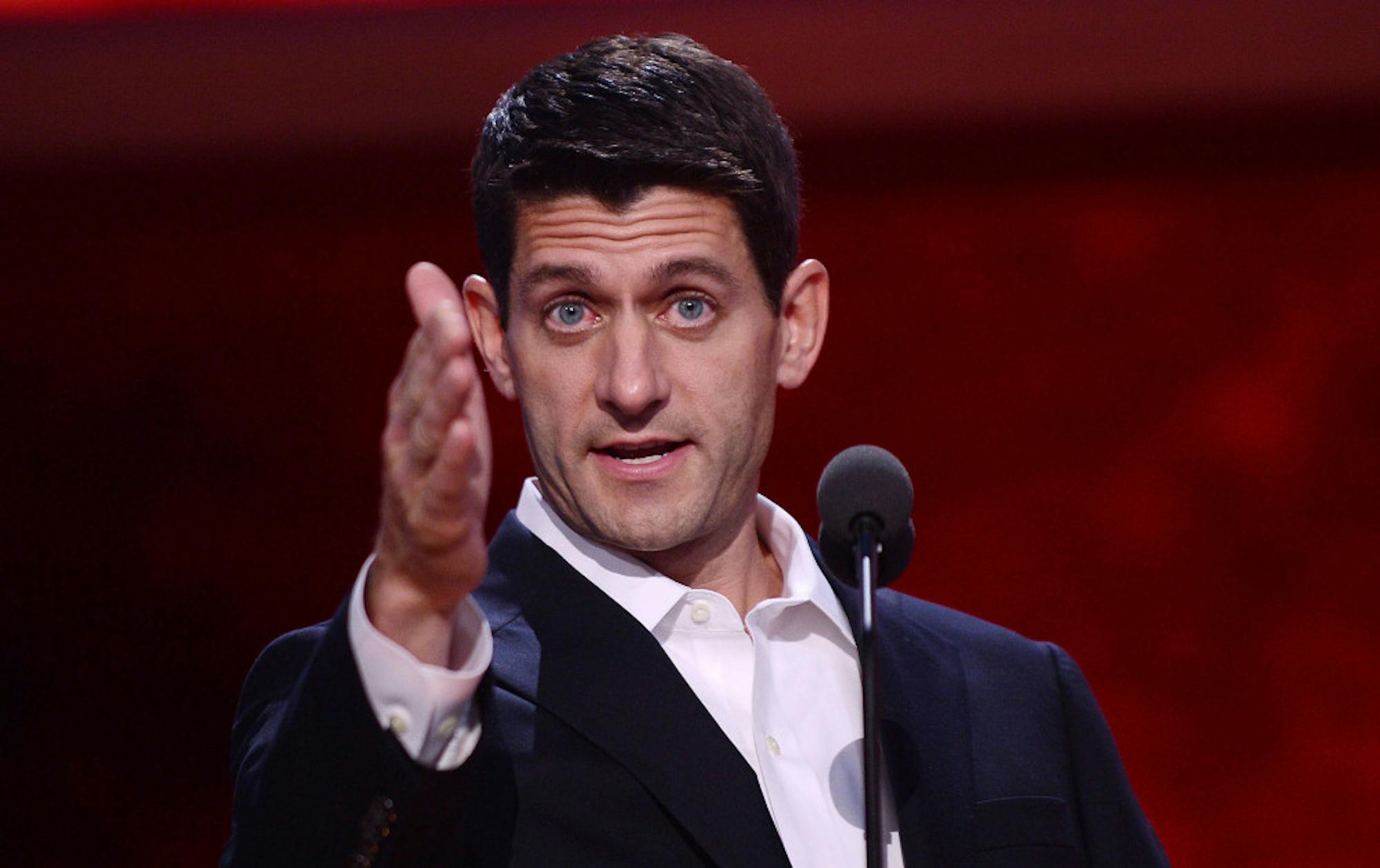
Paul Ryan has declared he will not run for president in 2016.