
Content warning: This article discusses child abuse and domestic abuse.
2018 may be shaping up to be the year of the documentary. With films like “RBG," “Won’t You Be My Neighbor” and “Three Identical Strangers” released in theaters, the documentary has seen a surge in quality output. While these theatrical releases have dominated the media spotlight for the genre, the best documentary of the year may be quietly minding its business in Hulu’s library.
“Minding the Gap” tells the story of three young men from small town Rockford, Ill., following the trio's childhoods and their love for skateboarding, as well as the confluence of the two. In an innovative twist, the documentary is directed and filmed by one of its subjects, Bing Liu.
"Minding the Gap" has a familiar hand-crafted, low-budget style, but it also utilizes a wholly unique technique. A significant portion of the film depicts people skateboarding in scenes that are quite dynamic. Liu follows his subjects as though he is simultaneously riding and filming alongside them, capturing the sport's smooth artistic flow while highlighting its difficulty. The cinematography brings a great deal of the subjects' emotions to life in what is typically a relatively grounded and understated genre.
Liu follows his childhood best friends in 23-year-old Zack, a new father, and 17-year-old Kiere, a high school dropout who faces the harsh reality of joining the labor force.
On its surface, the film's themes are relatable: Zack and Kiere grapple with how to balance their idealistic passions and their realistic futures. The calmed ignorance suddenly shattered by the impending existential panic of creating a viable future for both themselves and their loved ones is something with which college students can connect. Even if they cannot relate to skater culture, young-adult viewers are likely to ask themselves when they can take time off from being an adult and devote it to things that make them happy.
With Zack and Kiere starting at the bottom of the corporate ladder, it becomes clear that skateboarding is not just their passion but rather an escape from troubled lives at home. All three individuals were either victims of abuse from their father figures or, as in Zack's case, are domestic abusers themselves.
The confrontational tone of Liu’s questions and in his friends' responses suggest that the making of the documentary itself was cathartic for the trio. Rather than suppressing their history with abuse, Zack, Kiere and Liu are forced to address how these experiences have influenced and changed their perspectives, especially given that they increasingly find themselves in situations similar to those of their abusers. Liu even admits that he made the film as a way to let go of his pain and anger.
"Minding the Gap" hits its climax with Liu's questioning Zack about allegations of abuse that Zack's former partner, Nina, has levied against him, as well as Zack’s absence in his son’s life. Zack admits to domestic abuse and explains his disappearance and alcohol addiction as a suppression of fear and guilt. The film in no way rationalizes Zack’s actions but, rather, forces him to address the damning realization that he is now no different from his father, whom he criticizes frequently. Therein lies the film's tragedy: What happens when we become everything we set out not to be?
“Minding the Gap” tells the story of fathers and sons and growing up, subjects that are common to both documentary and narrative film. However, the challenges that its subjects confront, and their subsequent pain and growth, make the film equally emotional and rewarding.
'Minding the Gap' provides subjects with opportunity for reflection, redemption
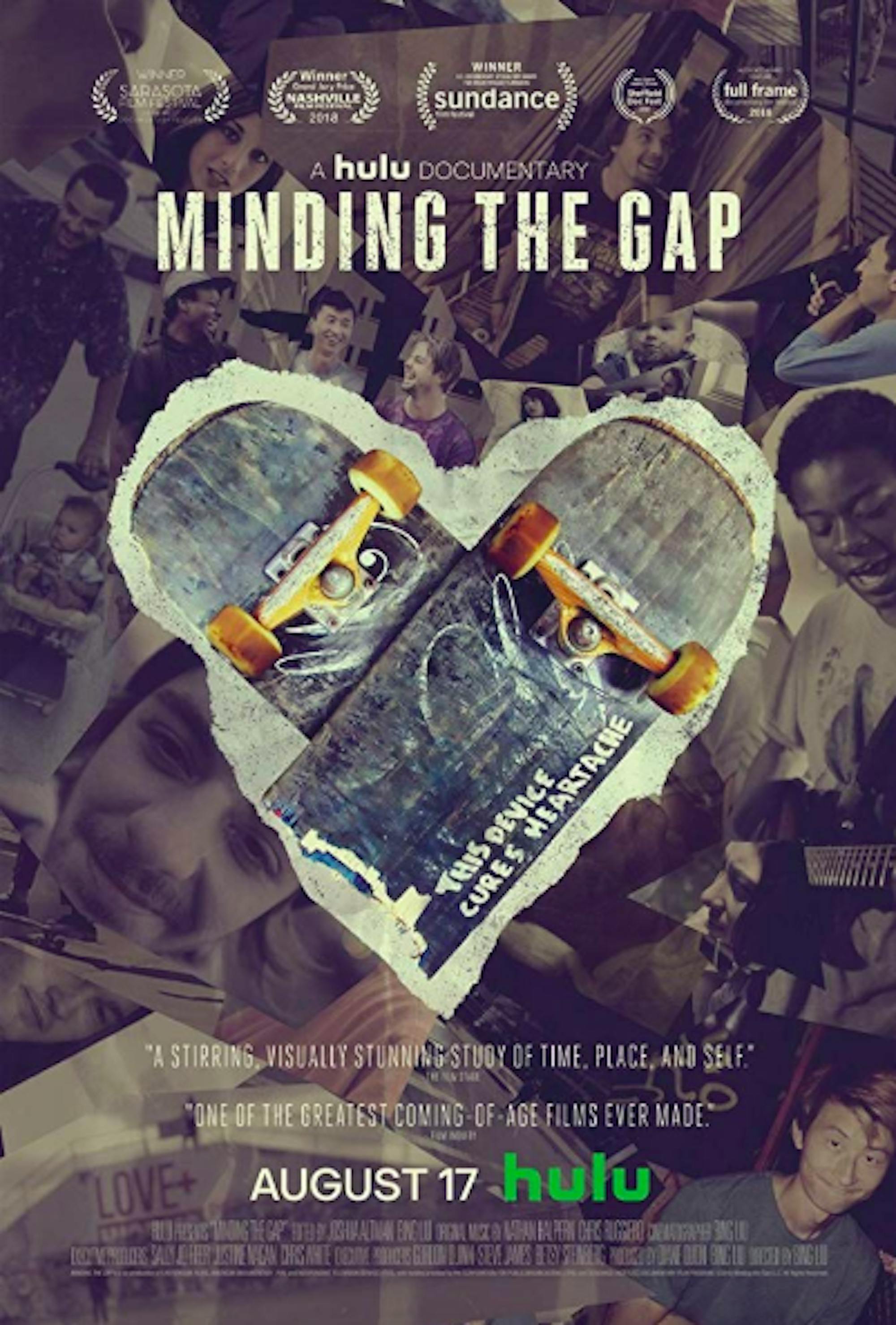
A promotional poster for the Hulu original documentary 'Minding the Gap' is pictured.
Summary
Teen-skater doc "Minding the Gap" poignantly tackles guilt and regret, invoking empathy for its subjects.
4.5 Stars



