
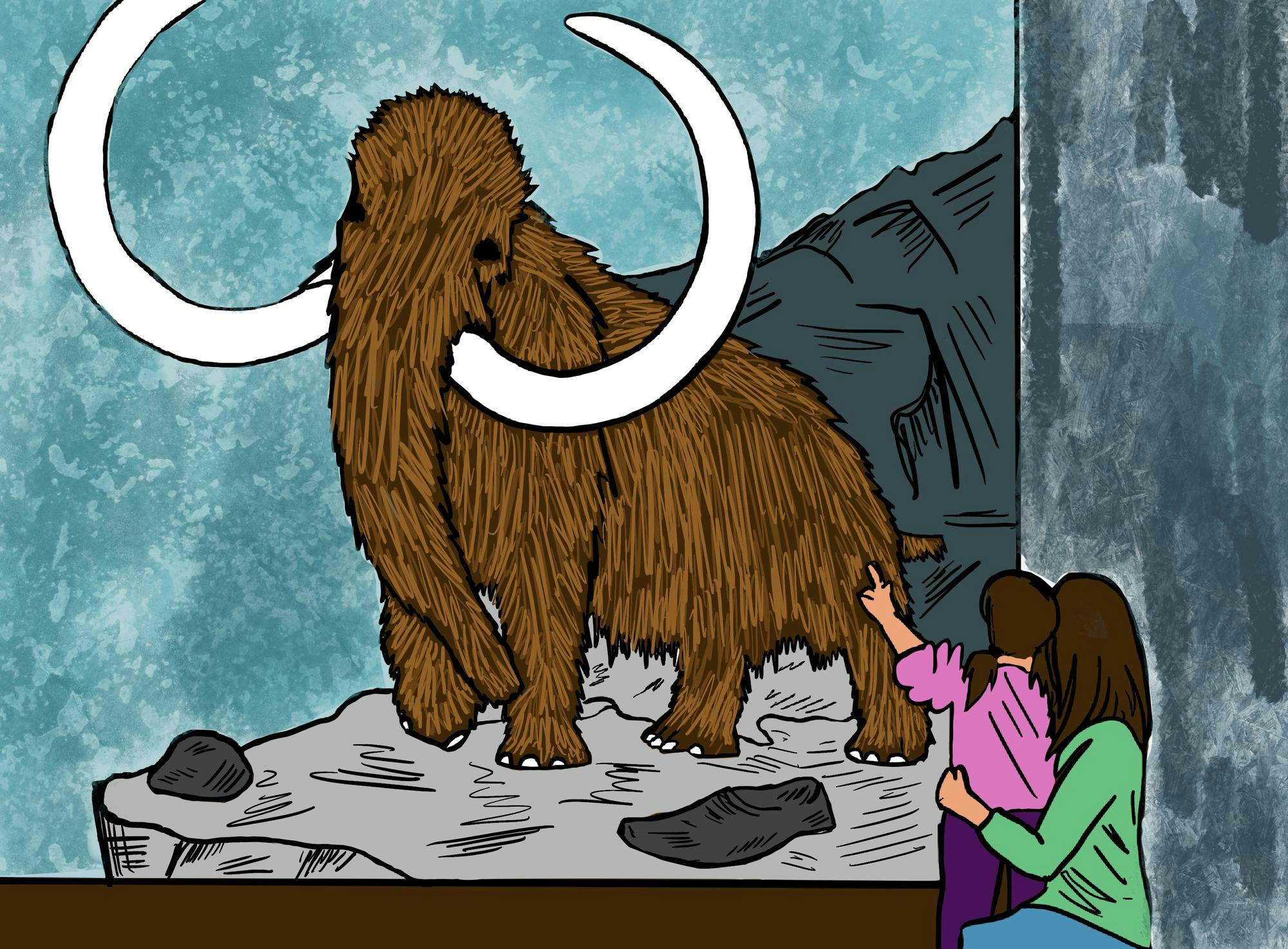
More than 47,000 species are currently threatened with extinction. Just last year, the International Union for Conservation of Nature Red List reported five newly extinct species and five others moved to the critically endangered list. Scientists from Dallas-based biotech company Colossal Laboratories & Biosciences are working to revive extinct animals in order to “jumpstart nature’s accestral heartbeat.” However, its choices in animals are questionable: Tasmanian tigers, mammoths, dire wolves and dodo birds. Colossal Laboratories & Biosciences’ mission, although a marvel of modern technology, is a shoddy attempt to restore balance to mother nature without addressing humanity’s failure to protect animals that went extinct in the last decade.
The company refers to its work as “functional de-extinction,” a process that manipulates genomes to ensure that once-extinct animals will survive climate change, disease and human interference. It claims that “resurrecting” these species will enrich biodiversity and replenish ecosystems.
Recently, its goals have come to fruition. Colossal Laboratories & Biosciences supposedly revived the dire wolf — a species of wolf that died out around 12,500 years ago. ‘Supposedly’ is the key word. No matter how aggressively the media is trying to reframe this as the revival of an entire species, it’s undeniable that, scientifically, it’s not. To summarize an immensely complicated process, scientists extracted DNA from dire wolf fossils to create genomes — sets of genetic information. They then compared these genomes to living species, such as wolves and foxes, to find that dire and gray wolves share 99.5% of their DNA. Using CRISPR-Cas9, a gene editing technology, scientists spliced gray wolf genes and replaced them with those of a dire wolf.
Although comparable to the dire wolf and presenting phenotypically as such, the dire-gray wolf hybrids are technically “genetically modified gray wolves.” However, Colossal Labs & Biosciences is holding firm in its stance that it has, in fact, revived the species. In an abstract on its website, Jeffery Kluger, an editor at large at Time Magazine, writes: “The pups are wolves. Not only that, they’re dire wolves.”
Its schtick — to “fix” humanity’s extinction problem — is entirely misleading. Nothing is being “fixed.” Colossal Labs & Biosciences claims it’s the key to the survival of keystone species that keep entire ecosystems alive. The keystone species it highlights on its webpage are wolves, elephants, rhinos, whales and buffalo — animals its efforts aren’t concentrated in reviving. The animals it’s resurrecting with the supposed goal of ecosystem replenishment died off anywhere from 89 years ago to roughly 10,000 years ago, and their former ecosystems have continued to survive without these animals.
Colossal Labs & Biosciences purports to be a company focused on enriching biodiversity by reviving species that keep ecosystems alive. Instead, it’s reviving an assortment of species that went extinct, for the most part, thousands of years ago. The company admits that it has no plans for environmental release. It frames this as an ethical boundary to its practice but fails to recognize that this refutes its advertised mission. Colossal Laboratories & Biosciences bounces back and forth between claiming its goal is to “slow” humanity’s impact on biodiversity and advertising that it’s aiding existing species in adapting to their changing ecosystems. Without actions that reflect these ambitions, the company’s only apparent motive is to “resurrect” extinct animals for the shock value.
Colossal Laboratories & Biosciences uses its funding and popularity to deliberately “resurrect” the most commonly talked about extinct animals. Under the guise of enriching biodiversity and ecosystems, the company toes the line between spectacular and unethical. Mother Nature ran her course, and scientists should leave the past in the past in favor of protecting existing animals rather than playing God.



