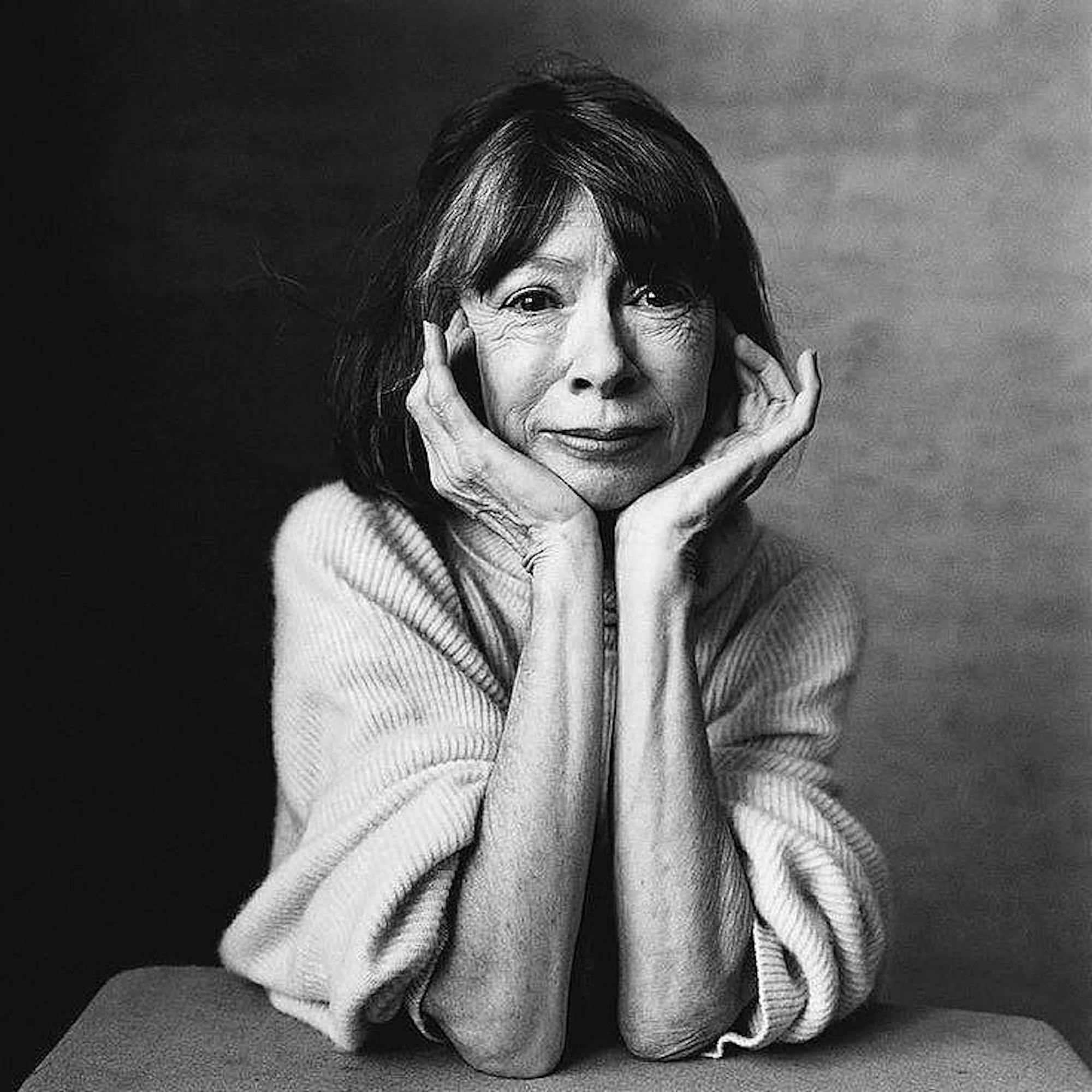
On April 22, Knopf Publishing Company released “Notes to John,” a posthumous collection of journal entries Joan Didion wrote after sessions with her psychiatrist. The 224-page work marks the first release of new content by the writer since her 2011 memoir, “Blue Nights.”
The project’s announcement was met with mixed reactions both by fans and by those who were close to Didion before her death in 2021. The prevailing question being raised is whether or not Didion would have approved of the journal’s release.
The ethics of posthumous publishing has been a divisive conversation for millennia. Authors’ consent and approval is constantly weighed against the literary implications of publishing unfinished or discarded works after their authors’ passing. Those who prioritize the former view posthumous works as violations of trust between the author and their executors. Those who prioritize the latter, however, often see the works as something larger than the author themselves, potentially benefiting the field of literature as a whole.
Which of these two camps Didion would have fallen in, of course, is the question on everybody’s mind. According to Lynn Nesbit, her literary agent, there is no “definitive answer.” However, even a brief perusal of Didion’s bibliography reveals her strong disapproval of posthumous publishing.
In October 1998, Didion published the essay “Last Words” in The New Yorker as a contemplation on Ernest Hemingway’s — or, in this case, his estate’s — long history of posthumous publications.
One aspect of the Hemingway estate that she discusses in particular detail is his collection of letters. Hemingway, as she explains, was vehemently opposed to his letters being made public. In fact, she directly quotes a letter to his executors on this topic, where he clearly states: “It is my wish that none of the letters written by me during my lifetime shall be published.” If that wasn’t enough clarity, he continues: “Accordingly, I hereby request and direct you not to publish or consent to the publication by others of any such letters.”
It would seem that such a simple and direct request would leave the executors with no choice but to abide. And yet, as Didion explains, Hemingway’s widow and executor Mary Welsh Hemingway would wait only 15 years after his death before directly violating his wishes by publishing his letters. How such an action could be justified once again boiled down to a statement about potentially benefiting the field of literature as a whole.
The question of Hemingway’s posthumous publishings draws somewhat striking parallels to the current conversation about “Notes to John.” In considering whether or not Didion would have endorsed the journal, “Last Words” illustrates her likely disapproval with stark certainty.
“The publication of unfinished work is a denial of the idea that the role of the writer in his or her work is to make it,” she wrote. “You think something is in shape to be published or you don’t, and Hemingway didn’t,” she wrote in another section. To read those words and still claim that the question of Didion’s view on posthumous publishing has no “definitive answer” suggests pure selfishness and complacency.
Didion’s personal opinions regarding posthumous publishing aside, “Notes to John” raises significant moral concerns due to the nature of its content.
“Notes to John,” as it is a reflection on her meetings with her psychiatrist, delves into the most personal and intimate aspects of Didion’s later life. Among these include, according to The New York Times, “her fear of aging and mental decline, her fraught relationship with her parents and, most of all, her agony over [her daughter] Quintana’s addiction and mental illness — a subject she was evasive about in her writing.”
Granted, Didion was no stranger to writing about immensely personal topics. Among her most well-known lines is her declaration that, “[My husband and I] are here on this island in the middle of the Pacific in lieu of filing for divorce,” in part of her essay “In the Islands.” Further, among her most acclaimed novels is “The Year of Magical Thinking,” which details the months following her husband’s death and daughter’s hospitalization.
“Notes to John,” however, is different for two important reasons.
Most obviously, Didion — as open and personal as her writing was — nonetheless reserved and exercised her right to view certain topics with exceptional reservation. While some use her previous discussions of her husband and daughter as well as personal fears as justification for the journal’s exposure of personal musings, the fact of their publishing should be taken as proof of the opposing view. This is to say, the fact that she has breached these topics in the past proves that Didion already made an active choice regarding the extent to which she was willing to share her experiences with these struggles. By publishing “Notes to John,” her estate is steamrolling this choice and robbing her of her agency to determine the limits of what would be shared.
“Notes to John” is also different from those previous works because its publishing rendered Didion unable to manage and mitigate her outward image both as a person and as a writer, something that was chiefly important to her when she was alive. Didion was, first and foremost, a person who valued privacy and control above all else. She had an intricately woven public persona: one of constant stability and elusiveness, hiding an unmatched eye for observation behind black sunglasses and a cigarette.
Joan Didion, at the end of the day, was not some fictional character — she was a person. Regardless of how thoroughly accurate her public image was to her real self, she held every right to present it as such.
In an interview with NPR, Jordan Pavlin, the publisher and executive vice president at Knopf, describes “Notes to John” as “fill[ing] in those blanks” between lesser-known aspects of Didion’s life. Why are we, as the readership, entitled to have those blanks filled in for us? The question is, of course, rhetorical: We are not, and we need to learn how to start respecting that.