Psychology at Tufts has long been defined not just by its research and teaching but by the people who bring the discipline to life. The recent passing of former department chair and beloved professor Sam Sommers marked a turning point, prompting both reflection and structural change within the department he helped shape.
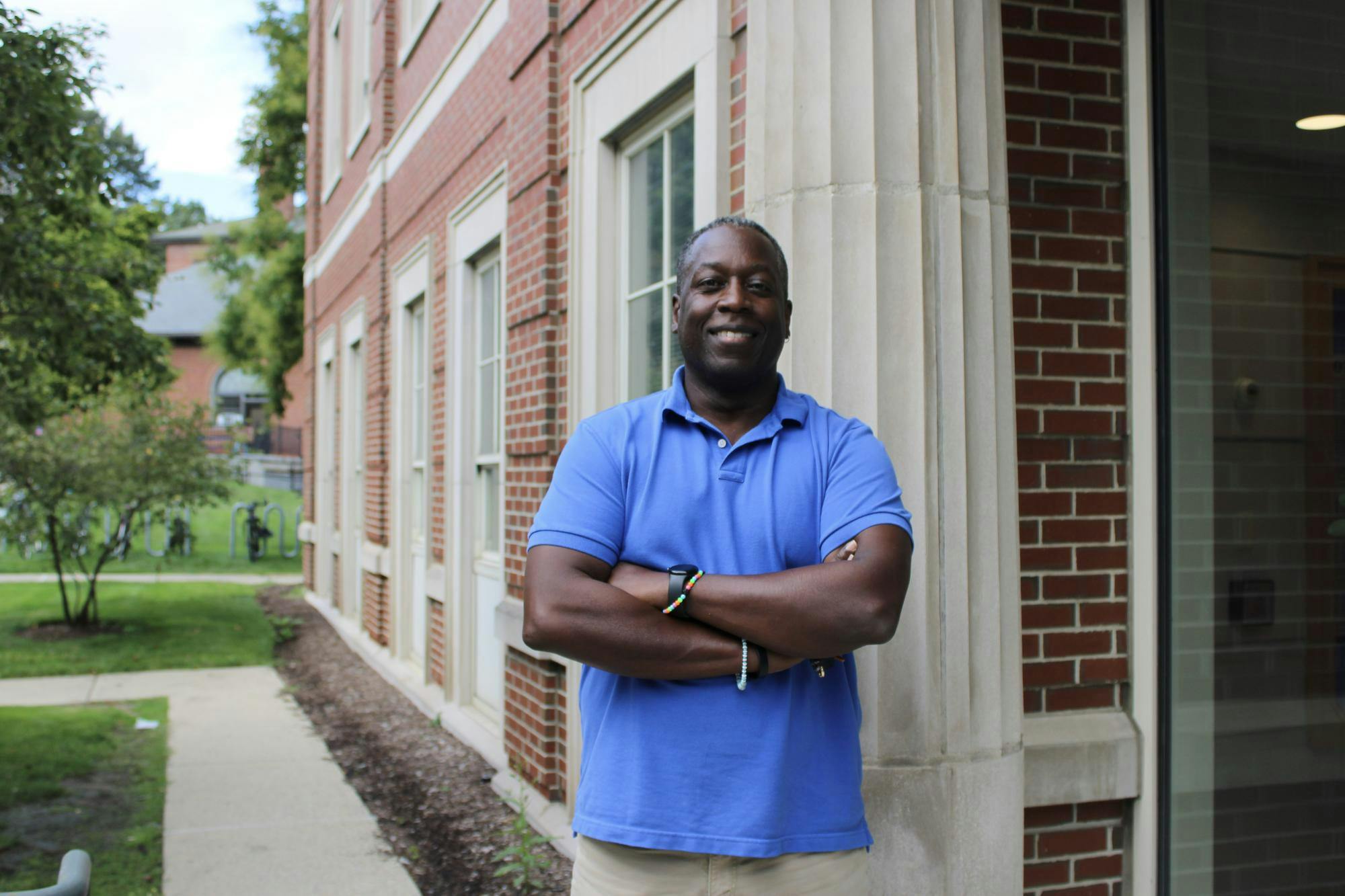
After Lisa Shin, a professor in the department, assumed the role of interim chair for the spring of 2025 and part of the summer, Keith Maddox, a longtime professor in the department, recently took over as department chair.
“I’ve been at Tufts since 1997, so I’m entering my 28th year here, and more recently, the role of department chair rotates amongst different faculty in the department, and our most recent chair was Sam Sommers, who passed away relatively suddenly last spring. I was slated to be the chair after that … but then he passed away suddenly, and so that kind of accelerated things,” Maddox said.
Maddox earned a Bachelor of Arts in Psychology from the University of Michigan in 1991 before pursuing graduate study at the University of California, Santa Barbara, where he completed both his master’s (1994) and Ph.D. (1998) in social psychology. While working on his dissertation, he also served as a lecturer in the psychology department, teaching courses before transitioning into a faculty role as an assistant professor. His early research examined differences in Afrocentric and Eurocentric features, showing how facial characteristics shape perception and stereotyping.
“[Stereotyping] goes beyond skin tone and goes into people’s facial characteristics. … Being Afrocentric means having darker skin tone, but it also means, tighter, kinkier hair, broader nose, fuller lips … compared to [being] more Eurocentric, which will be lighter skin and then longer, straighter hair, narrower noses, thinner lips,” Maddox said. “We’ve demonstrated that people pay attention to that kind of variation … so that if you are darker-skinned — if you're more Afrocentric — you tend to get stereotyped more negatively compared to if you are less Afrocentric or [have] lighter skin.”
Stepping into the chair role after Sommers’ passing was no easy task. Yet Maddox was quick to stress that he never faced it alone. The department’s leadership and staff rallied around him, providing steady guidance and collaboration that transformed a daunting transition into a manageable one.
“We have such a great and supportive staff. I have a leadership team in Lisa Shin, the director of undergraduate studies, and then Paul Meutner, who is the director of graduate studies. So all those people make my job much, much easier to transition into. So, while it is new, and the situation is a little challenging, it’s been as smooth, if not smoother, than I could ever hope to expect,” Maddox said.
In addition to his teaching and administrative responsibilities, Maddox leads the Tufts University Social Cognition Lab. Building on his doctoral work, the lab explores how people form impressions of one another, with a particular focus on the cognitive processes behind racial stereotyping and prejudice.
“My focus has been on stereotyping and prejudice, which is how people may have preconceived expectations or ideas about another person based on their group membership, or preconceived emotional responses, like feelings of being favorable or unfavorable towards them, and then seeing to what extent [those feelings] influence our judgments and our evaluations of people,” Maddox said.
Maddox’s work aims to identify the core mechanisms of social perception pertaining to racial stereotyping, but also seeks to challenge these biases by developing interventions and dialogues aimed at mitigating harm.
“If we’re going to address [bias and stereotyping], we have to get people talking about them,” Maddox said. “I want to figure out ways that people can talk about racial bias more effectively, without feeling threatened or defensive or feeling like they’re being judged or stereotyped in some way.”
One area that Maddox believes may have potential to help reduce defensiveness in confronting racial bias is humor.
“We think that sometimes humor can be useful and beneficial, because what humor does is it does release people’s anxiety. It makes them feel a little bit more comfortable,” Maddox said. “If you can try to talk about race and other challenging issues in a humorous way, it has the potential to potentially let people release some of the anxiety that they might have and give them a little bit more opportunity to engage the topic.”
However, humor can be a double-edged sword. Maddox notes that making light of someone’s experiences may alienate them from fully participating in dialogue.
“[Humor] feels like a really thin line, because sometimes these satirical treatments will either make too much fun of a serious topic, or … they make the person that you want to come to the table the butt of the joke,” Maddox said. “We don’t actually have any work on that particular issue or that particular topic, but that’s something that I am interested in exploring more.”
As department chair, Maddox still manages his lab but is now much more involved in the administrative side of things: communicating with university leadership, ensuring that faculty have resources to conduct their research and creating new policies to support undergraduates.
“I used to have to care just about myself and the work that I do and now … I’m a little more in tune with some of the cares and concerns of all the other people,” Maddox said. “It’s just having a little bit more of a mindset of thinking about not just you, but thinking about everybody in the department and trying to come up with policies and procedures and make decisions that are going to be beneficial to everyone.”
Maddox’s vision for the psychology department places an emphasis on fostering a strong sense of community and shared responsibility, continuing and expanding upon the groundwork laid by his predecessor.
“I want people to still have the freedom and feel like they have the focus on the work and the job that they do, but … if there was some kind of a change, or [if] somebody had to step out for a little while, that they wouldn’t feel super overwhelmed at the idea of stepping in, because we’d have a sense of shared responsibility,” Maddox said.