
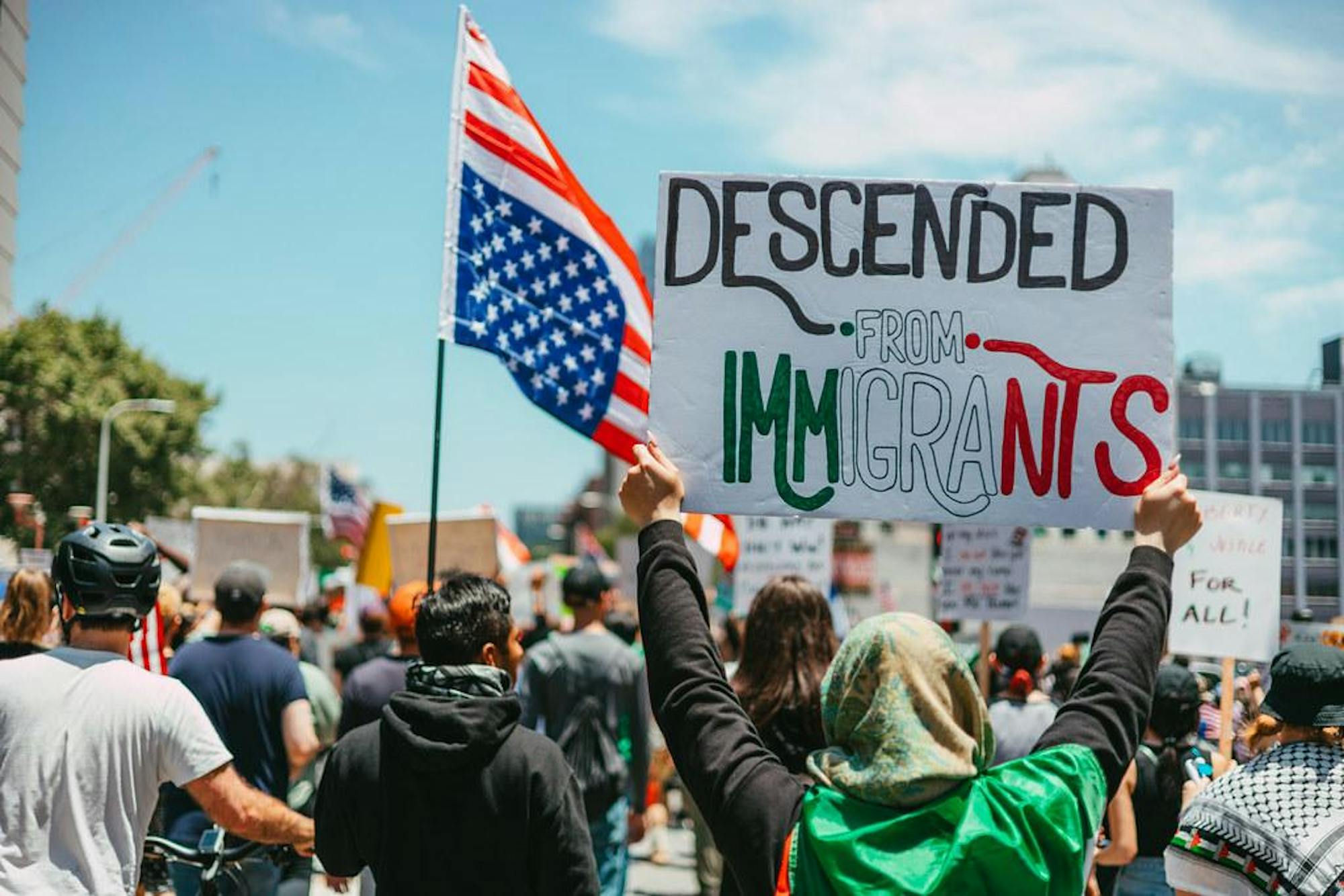
As counterintuitive as it may sound, protest, revolt and revolution are embedded in American culture. Our very country was founded on the American Revolution, with radical acts like the Boston Tea Party celebrated by our founding fathers. Suffragists endured hunger strikes and prison sentences just so women could secure the right to vote. Civil rights leaders organized bus boycotts so effectively that the very legislation surrounding them changed. Disability activists staged sit-ins in politicians’ offices for weeks on end to advocate for laws protecting disabled people. These acts of resistance are now remembered as honorable acts of courage, necessary for the development of our country. That same support, however, has not been extended to modern movements.
This American tradition of revolution continues, despite claims that Generation Z is largely detached from politics or that resistance to President Donald Trump’s second term is lacking. However, this narrative could not be further from the truth. There have been countless protests since Trump was sworn in, from the "No Kings" and "Hands-Off!" protests to anti-ICE gatherings. In fact, this February saw over 2,000 protests in the United States, compared to about 900 in February 2017. Yet, the exponential increase in national protests has not garnered the attention of America’s major news outlets. The day following the "No Kings" protest — where an estimated 4 to 6 million people were in attendance — news headlines were few and far between: a photo story on The New York Times’ front page, no top billing in the Wall Street Journal and dismissive coverage from Fox News. Local outlets and a handful of national platforms like CNN and The Guardian offered more substantial reporting, but overall, coverage of one of the largest protests America has seen in years was lacking.
Lack of protest coverage is nothing new. Even though historical moments like the suffragist movement and Civil Rights Movement are now honored, the popular narratives at the time often saw protesters as disruptive and upsetting. Consequently, many outlets likely refrained from reporting on these movements for fear of losing readers. In fact, the phrase ‘the revolution will not be televised’ emerged in the 1960s among Black militant groups and reflected this suppression of resistance.
At the end of the day, major newspapers like the Times and The Washington Post are corporations that prioritize readership and investors. They often refrain from covering topics like protests in order to maintain their readership and their investors. For example, the Times, receives millions of dollars in advertising from fossil fuel companies like Saudi Aramco, who would be financially devastated if mass protesting forced Trump to implement greener policies. Furthermore, the Post is notoriously owned by Jeff Bezos, a billionaire who benefits from tax cuts with Trump in power. This is not to dismiss the talented and valuable journalists working at these outlets, but at the end of the day, televising revolution rarely aligns with corporate interests. People successfully mobilizing threatens those in power, and the Times and the Post, as billion dollar companies, are part of that power structure. By showing Americans just how many people are coming together to protest our administration, the movement will only be strengthened.
Protest suppression and mediation have a historical precedent, and can result in readers unknowingly turning a blind eye to community voices and resistance when their primary newspapers do not disclose such activism. A few decades ago, local newspapers were abundant across the United States, meaning they could reliably cover community resistance without ownership by billionaire tycoons. Instead, they were historically owned by local residents, the Ochs family and Bingham family being a couple of the most famous examples. But there has been an epidemic of local newspaper closures as of late, with nearly one in five newspaper organizations shutting down over the past decade and a half, with more closing each week. It’s becoming increasingly difficult to access news updates from the media without corporate interests. Instead, people turn to social media, where protest attendees post TikToks about their experiences. Accessibility and transparency are imperative to the Daily’s mission, which is why the organization’s role on campus and the surrounding Somerville and Medford area is so important. Being integrated into the larger community means that The Tufts Daily will report on local mobilization efforts, such as the protest that followed Rümeysa Öztürk’s detainment — whereas, in most communities, these events receive little attention.
The good news is that, even though protests are not being published, people are organizing in ways that will inevitably gain attention and prompt change. For example, stock in Tesla has likely dropped due to boycotting efforts, people have openly criticized Immigration and Customs Enforcement agents and the National Guard as they move throughout D.C. and during "No Kings" protests, millions of people across the country mobilized to hold one of the largest protests in recent memory. The American tradition of revolution is alive and well, even if corporate news organizations refuse to deem it a front-page story.



