
With the form for the intent to study abroad during the academic year due Saturday, many Tufts students are considering how studying abroad can fit into their busy schedules. For some, summer programs offer the best fit so they can complete their major requirements. From studying a range of subjects in Talloires, France to investigating public health in Chile, Tufts offers many opportunities for students to have immersive experiences in foreign countries in the summer.
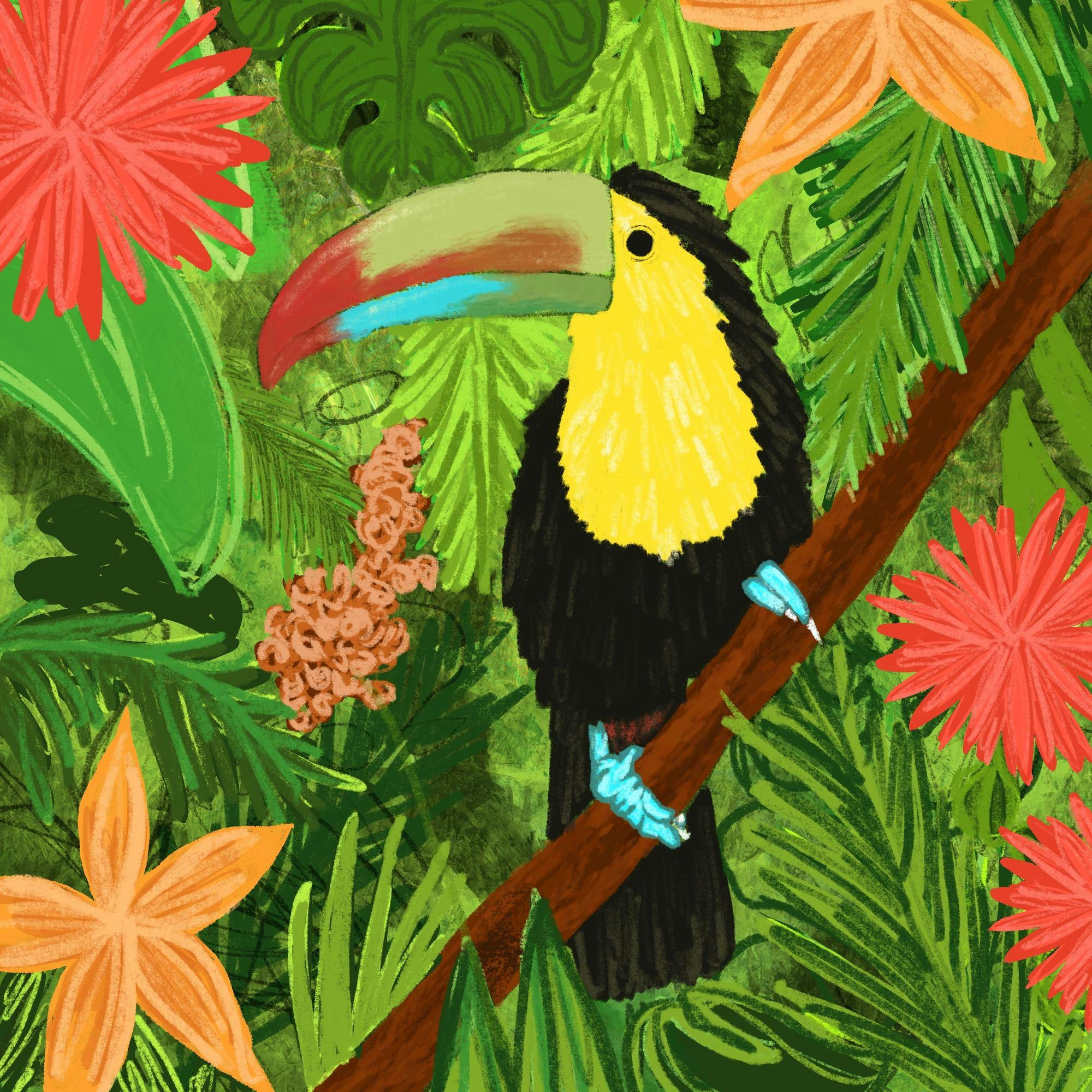
Tufts in Costa Rica is a new summer program that promises a transformative experience for students by combining Spanish language immersion and culture with biology field work. The five-and-a-half-week program will take place from May 18 to June 25 in San José as well as two research stations in the rainforest. Tufts faculty are working with the Costa Rican Language Academy and The Organization for Tropical Studies to provide this unique opportunity that promises to fulfill students aspirations for Spanish language growth and scientific curiosity.
“It seemed like such a natural way to team up,” Colin Orians, chair and professor of biology, said. “[We created] a program that both gives students an exposure to the language and the culture but also an opportunity to explore the amazing biodiversity of Costa Rica and learn how to be scientists.”
Three professors from the Spanish and biology departments have been coordinating the program for over a year after seeing that students were lacking a suitable summer option that would help them advance their language skills. The professors noted many overlaps between their departments and a survey sent out last winter demonstrated interest in a dual biology-language immersion program.
“I keep getting questions from students like: ‘How can I accelerate my language requirement?’ and, ‘I want to go abroad but I can’t spend a whole semester,’” Juan Escalona Torres, an assistant teaching professor in the Department of Romance Studies who will accompany students on the trip, said. “Students are getting really excited about it because it’s a way to fast track the language requirement but also get that cultural exposure and immersion.”
Students will spend three weeks in San José where they will focus on improving their Spanish by living with a host family while taking a language class through the Costa Rican Language Academy.
The program is open for students of varied Spanish proficiency regardless of biology experience, with the minimum requirement being that they have completed Spanish 3 or placed into Spanish 4. There will be an information session on Wednesday for those who are interested in applying.
Those whose next class would be Spanish 4 will take an intermediate language immersion class while those who would be in Spanish 21 will take advanced language immersion. Heritage learners or any students above the level of Spanish 22 will take a class on Costa Rican society and culture. These classes will count for three credits and can advance students farther along their language track.
“We found when students are immersed in these foreign study programs, they make tremendous gains in not only their language skills but also their cultural competence,” Amy Millay, teaching professor for romance studies and community health, said. “If students engage in a program like this … they might even come back and be inspired to study abroad for a full semester. … And, certainly, those skills they gain will help to define their path towards whatever career they choose.”
Millay described that advanced Spanish students in the Costa Rican society and culture class will cover topics like sustainability, indigeneity and ecotourism. It will be taught by ‘Ticos’ — a colloquial term for Costa Ricans. She expressed that the Costa Rican Language Academy would offer small classes and were more than willing to work closely with Tufts faculty.
Language immersion is extremely helpful in developing language skills outside of the classroom environment. Students will expand upon their language track at Tufts both by taking a Spanish class and by engaging with their homestay experience while living in a new city and culture.
“The best learning takes place when you … have a meal with a family … and try to listen to all of the conversations,” Millay said. “[You] see over the course of a certain period of time that maybe you could understand 10% of the conversation the first week, and you’re understanding 60 or 70% in the third week.”
Following their time in San José, students will travel two hours north to La Selva Research Station, which is located in a wet lowland tropical forest. The station has some of the longest running ecological data sets in the tropics, focusing on forest dynamics, forest succession, global change, human-nature interactions, agroecology and aquatic ecosystems. La Selva has an outstanding 2,077 species of plants, 125 species of mammals (72 of them bats), 470 species of birds as well as other wildlife.
Orians completed his graduate work in the late ’80s in Costa Rica, even performing some of his research at the La Selva Research Station. In 2001, he began teaching Tropical Ecology and Conservation, where students write a research proposal and then conduct their experiment during a two-week trip to Costa Rica. Both of these experiences have made Orians distinctly familiar with conducting research in the region.
After a week at La Selva Research Station, students will travel to a different environment for further research in a cloud forest in Montverde. This station is more remote and elevated and may require moderate hiking. During the biology-focused period of the program, students will take a course called Tropical Biodiversity in a Changing World.
Orians described the importance of students learning global change biology. “It is important to understand how people, biodiversity and systems are adapting to our changing planet,” Orians wrote in an email to the Daily. “There is a tendency to focus on negative outcomes, but there are examples of adaptation that can give us hope and students will explore these as well.”
The program culminates in a final project conducted in Spanish based on both the language immersion along with biological research.
The program fee is $9,975 and students can apply on the Tufts Global Education website by Dec. 1. Those who participate will leave the program with a study abroad experience, improved language skills and an understanding of global change biology.
“If you don’t have a chance as a student at Tufts to build a sense of wonder about other cultures, about biodiversity, about the process of science, you’ll never really engage,” Orians said. “I’m hoping this fills students with wonder.”



