
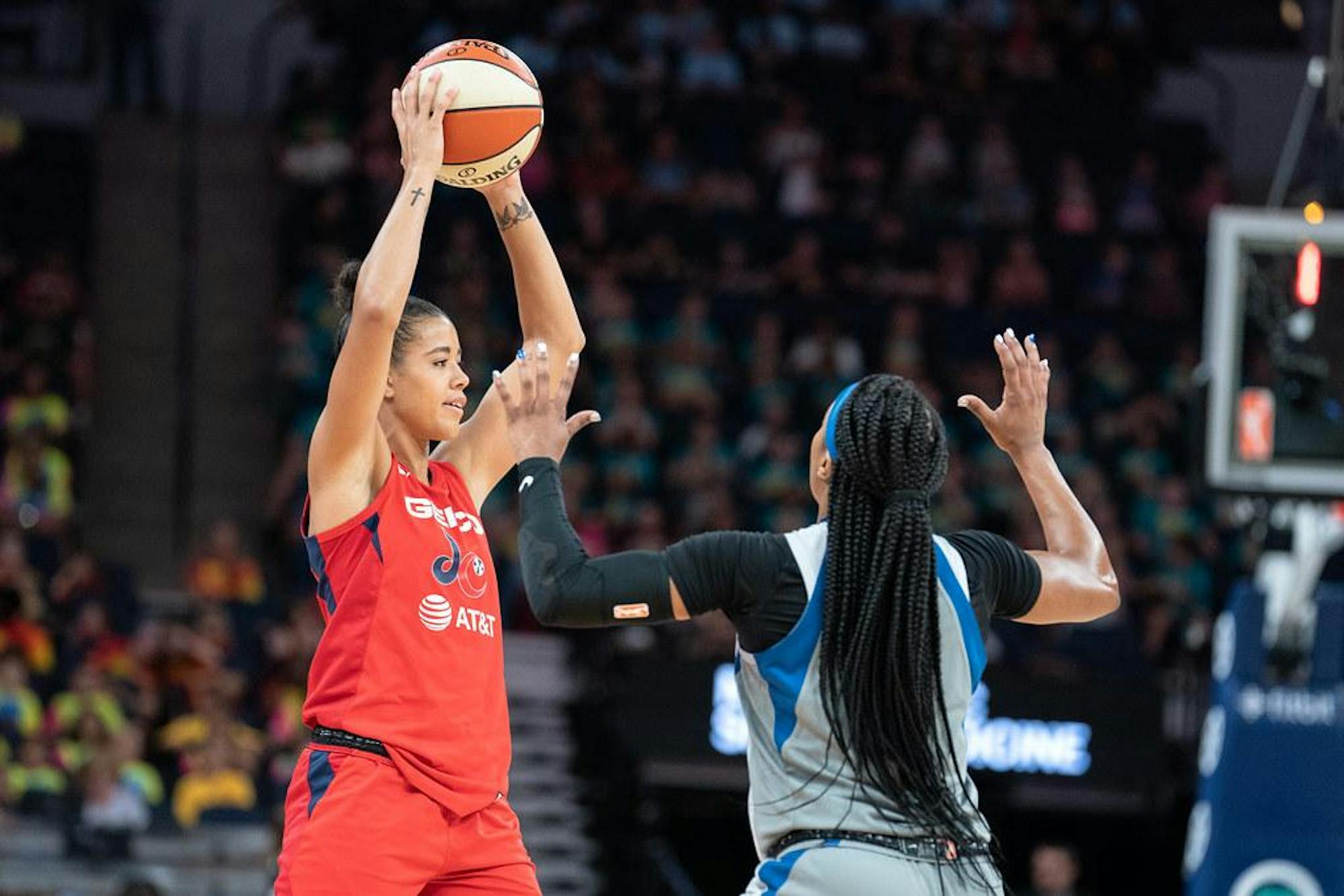
In 1996, after much struggle to prove that women’s sports were a viable business model, the NBA Board of Governors approved the concept of a women’s-only league. On June 21, 1997, the WNBA officially began competition. On Saturday, the WNBA capped its 29th season with the Las Vegas Aces crowned the 2025 champions. Initially a league of only eight teams, the WNBA now boasts 13 active teams and recently announced expansion efforts to five new cities to accommodate the immense surge in viewership and attendance in recent years. In 2024, the WNBA set an all-time viewership record — its most-watched season in 21 years. Online viewership wasn’t the only statistic that improved during the 2024 season — in-person attendance also skyrocketed, shooting up 48% from the 2023 season and marking the highest total attendance in 22 years. All 12 teams saw an increase in home game attendance, with the Indiana Fever leading the pack with a 319% increase. Recently, WNBA officials announced that the league has already broken its single-season attendance record for 2025.
Following the WNBA’s trend, women’s sports in general are experiencing a cultural renaissance. Since the establishment of Title IX — which prohibited sex-based discrimination in federally funded activities, there has been an increase in athletic opportunities available to female athletes — women have dominated athletic fields. Alongside legends such as A’ja Wilson, Napheesa Collier, Alyssa Thomas and Breanna Stewart, standout rookies have helped usher in a new era for the league. For one, Caitlin Clark’s 2024 debut with the Indiana Fever after the draft prompted a surge in viewership and game attendance. Angel Reese of the Chicago Sky and Cameron Brink of the Los Angeles Sparks have also significantly impacted league popularity. This season, rookie Paige Bueckers of the Dallas Wings elicited a similar response, with WNBA viewership steadily increasing, up 7% from 2024.
Unfortunately, as viewership increases, so does discourse, disrespect and mistreatment — from leadership and fans alike. WNBA players’ salaries remain drastically lower than those of their male counterparts. The objective differences in revenue between the WNBA and NBA have prompted a noticeable disparity in respective salaries, calculations indicate that the average WNBA salary should be roughly one-quarter that of the average NBA salary. Instead, WNBA players earn about 80 times less than the average NBA player. Furthermore, the current WNBA player contract — unlike the NBA player contract — does not guarantee that a portion of general league revenue will go to the players. Although viewership isn’t necessarily in the hands of the league administration, the disparity between the NBA and WNBA league contracts indicates that, at its core, this is an administrative issue.
Napheesa Collier of the Minnesota Lynx recently made a statement at the Lynx’s postgame conference, shaming the league’s commissioner, Cathy Engelbert, for her apathy towards the players and her unwillingness to pay them what they’re owed. Players are rightfully outraged by the enormous surge in viewership benefitting higher-ups, while not being reflected in their personal salaries.
Administrative shortcomings have also left players at the mercy of racist, misogynistic and homophobic discrimination from onlookers. In a 2024 interview, Engelbert failed to address the often misogynistic and racist roots of online discourse. More recently, the entirety of the WNBA was subjected to what I would go so far as to deem sexual harassment. Not once, not twice, but four times, various game attendees have thrown sex toys onto the court. Throwing anything on the court creates the potential opportunity for injury, but hurling phallic objects at women while they work is blatantly sexist.
For fans, sports games are social events. For players, they are work. These athletes dedicate hours to preseason bootcamp, practices, games and film review sessions. Subjecting women to male genitalia while they work in a female-dominated space is blatant sexism and harassment. By pelting players with phallic objects, fans suggest that their dedication to their professional careers is irrelevant — what’s superimposed over every three-pointer, every MVP designation and every playoff game is that, in the eyes of the men assaulting them, they are objects of sexual desire.
Although men make up a slight majority of WNBA viewership, they are also the primary perpetrators of the constant sexualization of women in athletic fields. Beyond such overt acts of harassment, misogyny manifests in the casual devaluation of women’s achievements. Women in sports become the scapegoats for sexism and misogyny, likely due to the fact that athletics are a historically male-dominated space. Women deserve appropriate representation in athletic fields and non-discriminatory treatment. The fact that WNBA players face both shockingly low salaries and sexual harassment on the job is a dismal reminder that we’re still fighting to receive equal treatment in a field men have commandeered.



