I remember little from my early years in central London, though the city still feels like an echo of home. I was 4 years old when we left, and my childhood memories exist mostly as fragments: my favorite park, the hum of traffic and a toy monkey. This monkey was about the size of a small bag of potatoes, poorly stuffed with uneven stitching, and it was my favorite thing in the entire world. I would sleep with it; I would eat with it. I was devoted to this humble lump of fabric and, as far as I was concerned, it was under my protection. We all remember our childhood object of affection, fiercely defended with disproportionate love. To protect something fragile simply because it cannot protect itself — this is, in retrospect, our first expression of selflessness and empathy, an instinct we too often unlearn as we grow and mistake detachment for maturity.
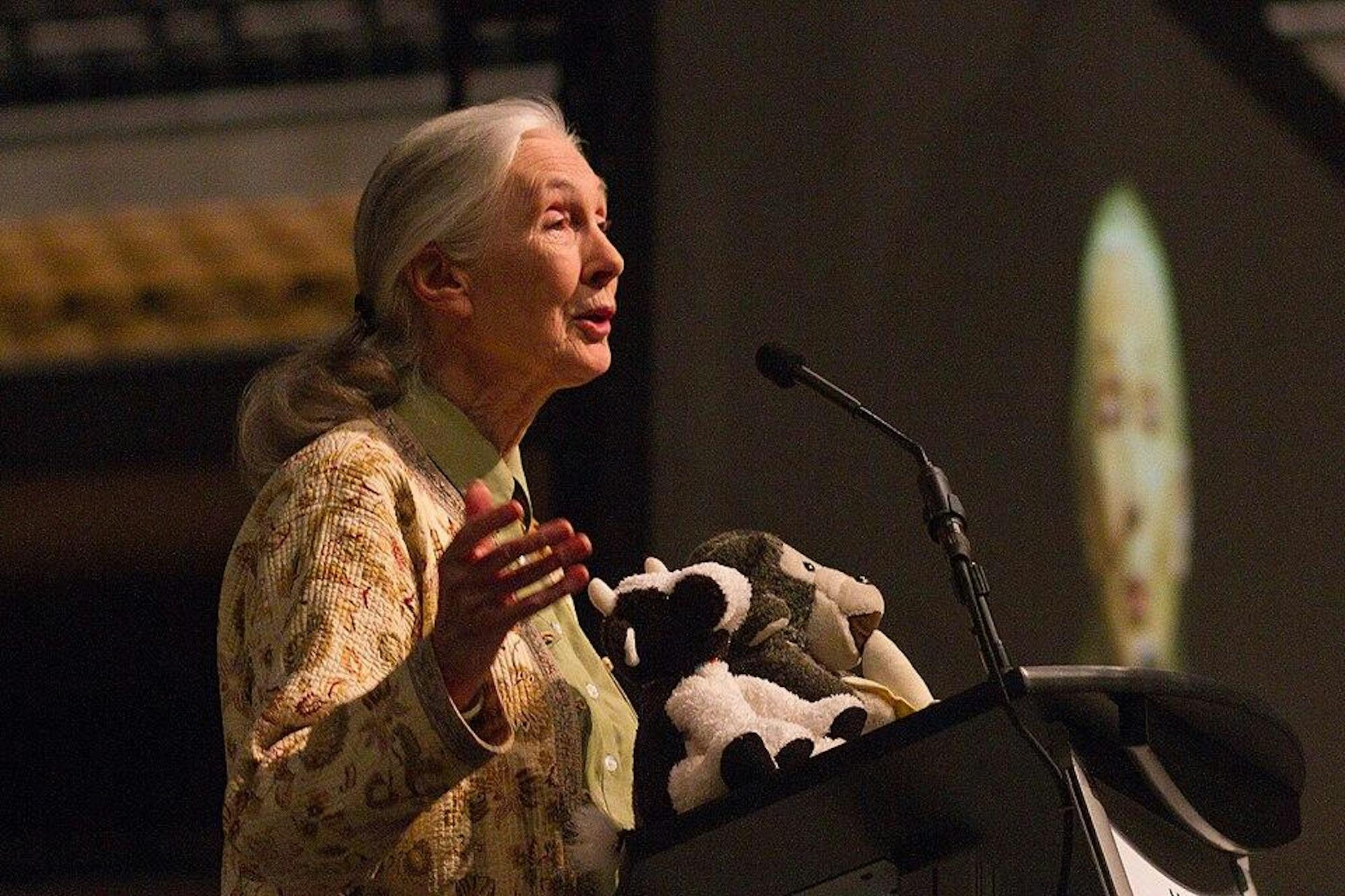
I am grateful that curiosity was encouraged in my household. Nature documentaries were background noise, so David Attenborough’s voice became a familiar companion. Watching Attenborough’s films helped me form a deep appreciation for the natural world, but it was a school biology assignment that introduced me to someone who changed my perspective on conservation. I discovered Jane Goodall while searching for an “environmental role model” to write about — someone whose work, as my teacher put it, spoke to us.
Until that moment, I had been told frequently, both by close mentors and family, that I was too emotional and that excessive feelings were a liability — not just in the discipline I hoped to pursue, but in life more broadly. I began to internalize the idea that emotion was particularly incompatible with science — a notion most disheartening for someone who loved studying biology yet simultaneously relied on emotional sensitivity to guide them. My dreams of becoming a conservation biologist quietly dissolved, replaced by the conviction that sensitivity had no place in the field. Reading about Goodall, and later following her work closely, dismantled that belief entirely.
Goodall’s work in Gombe National Park, Tanzania, transformed our understanding not just of primatology but of humanity itself. Through decades of field research, she observed chimpanzees using tools, engaging in complex social behaviors and expressing joy, grief and affection — traits long thought to separate humans from the rest of the animal kingdom. Her discoveries blurred those lines, redefining what it means to be intelligent and to form connections. Beyond her research, the Jane Goodall Institute became a force for conservation, establishing sanctuaries for rescued chimpanzees, leading reforestation initiatives and empowering local communities to protect their ecosystems.
Goodall embedded empathy into the very fabric of scientific and civic life, and she helped me embrace my own. When she passed away on Oct. 1, the weight of her legacy was felt globally. It also felt profoundly personal. She helped validate a truth I had been taught to doubt: that compassion is not the opposite of reason, but one of its purest expressions. She proved that science can coexist with moral clarity — and that it must. As Goodall often reminded us, the crisis now confronting our planet is not merely scientific but moral. Yet we live in a time when the empathy of those in power feels increasingly absent. Political representatives, at times, neglect the people they claim to serve, the land their predecessors once stole and the legal institutions whose integrity they are entrusted to uphold.
In the face of such moral distance, I think often of my toy monkey, cherished beyond reason. It is my earliest reminder that caring deeply is an instinct worth keeping, and it is the same instinct I hope to carry into my own future as an aspiring environmental lawyer advocating for a planet that is often treated without empathy.
Jane Goodall showed us that to be human is to be chimpanzee — to feel profoundly for things we care about. Her life’s work taught the world that the line between human and animal is thinner than we once perceived. I believe that the line between empathy and conviction should be, too.