
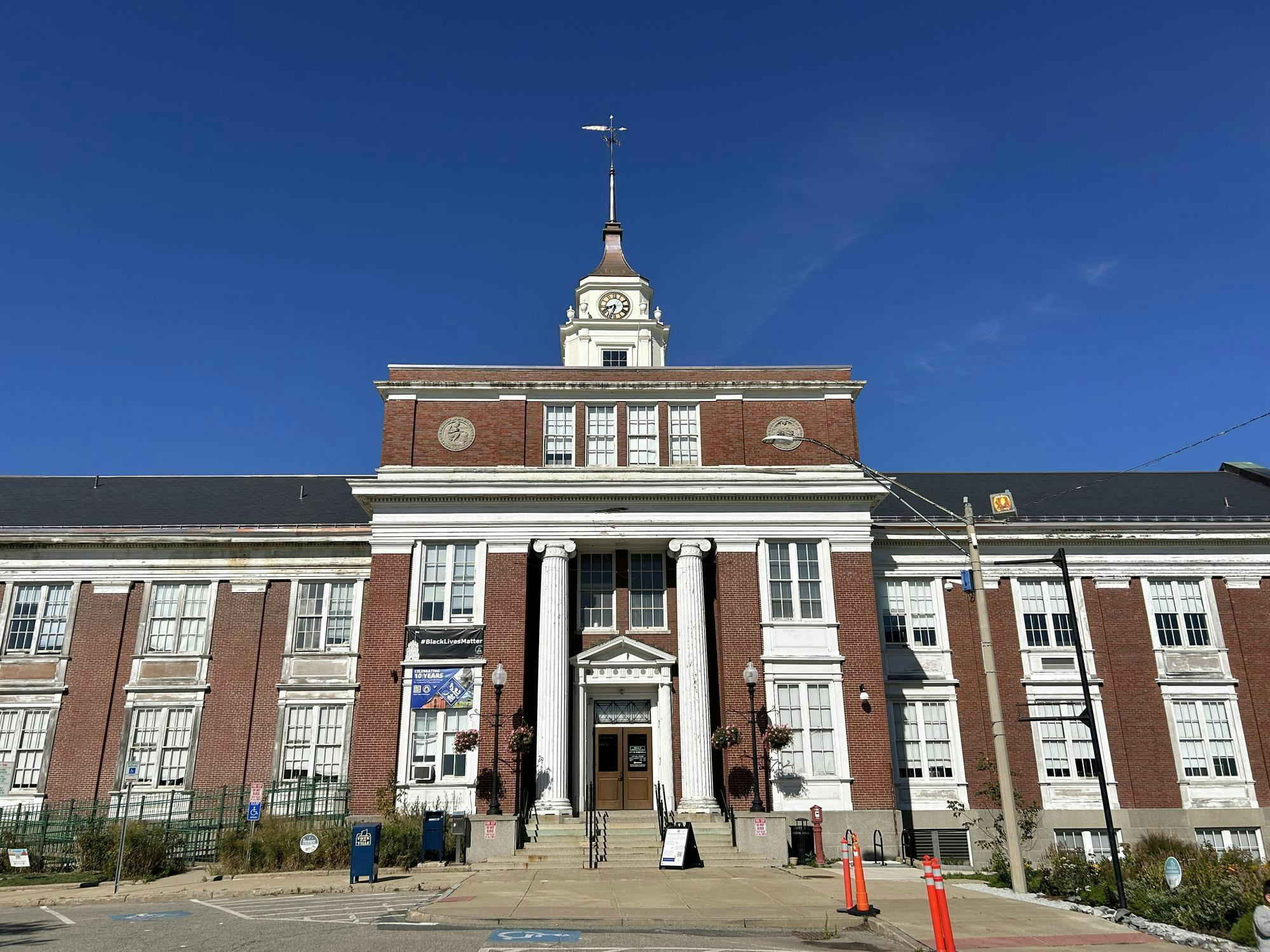
The Somerville City Council unanimously passed a resolution on Oct. 23 in support of the DRIVE Act, a statewide initiative that would allocate $200 million in funding for public colleges and universities throughout Massachusetts.
The bill, announced by Massachusetts Gov. Maura Healey in late July, aims to protect the state’s higher education system from recent federal funding cuts, which have targeted roughly $2.1 billion in public university funding nationwide.
“I think the unanimous vote demonstrates that our city is united behind the belief that education should remain accessible, affordable and debt-free,” Councilor Will Mbah, who sponsored the resolution, said. “This consensus reflects Somerville’s values and our understanding that public higher education is a public good that benefits every community, not just the students enrolled.”
Massachusetts’ economy has long revolved around its top-ranked higher education system, which generates billions of dollars in income from research activity and attracts highly-skilled employees from around the globe. With colleges and universities in Massachusetts providing 320,000 jobs and $70 billion each year, many fear that federal funding cuts will erode the backbone of the state’s economy.
“For Somerville, the impact [of funding cuts] is tremendous, because hundreds of Somerville residents attend community colleges, state universities and [the University of Massachusetts] every year,” Mbah said. “More stable funding actually just means lower student debt, more workforce trainings and more opportunity for first-generation immigrants and low-income students [and] stronger local industry that relies on skilled, locally-educated workers.”
At the Oct. 23 meeting, city councilors heard testimony from three community members who work in higher education, including Joy Solon, a graduate program manager in the sociology department at the University of Massachusetts, Boston. Solon noted that, due to funding cuts, several of her students lost research positions, while over 10 faculty members lost their jobs at research institutes that primarily support minority communities.
Tufts has also felt the impact of reduced federal funding, with community members across both STEM and humanities departments grappling with grant cancellations and the loss of research funds.
Funding from the DRIVE Initiative would flow into two major areas: a $200 million research pool at MassDevelopment that would support projects at hospitals, universities and independent research institutions, and another $200 million for public higher education to cover research costs, campus partnerships and hiring. The latter portion would be funded through revenue from the Fair Share Amendment, the 4% surtax on annual income over $1 million approved by voters in 2022.
“Should [the DRIVE Act] be implemented, there’s going to be ripple effects of creating security around higher education and around research, because right now, things are very uncertain [and] very volatile,” Solon said.
Max Page, president of the Massachusetts Teachers Association, helped spearhead both the Fair Share Amendment and the original proposal for the DRIVE Act. He is currently part of the DRIVE Acceleration Team, a group of leaders across unions, businesses and universities fighting to get the bill passed by the state legislature.
“The reason [the DRIVE Act] is so important is that our colleges and universities, public and private, have been decimated by these federal cuts,” Page said. “The fundamental research that we do has been hurt. In that way, it is simply about saving jobs [and] saving the life-saving research that our colleges and universities do.”
Page hopes the DRIVE Act will serve as a blueprint for other states hoping to stabilize funding for public higher education.
“[Colleges and universities are] the centerpiece of our economic strength. … We have to protect that investment,” he said. “[The MTA] thinks it’s so important that we’ve actually started urging other states to follow suit [and] use their revenues to protect public education.”
For Mbah, the DRIVE Act has the potential to open up educational opportunities for future generations of immigrant and first-generation students, an issue that is deeply personal to him.
“As someone who came to this country as an immigrant, struggled to find my footing and ultimately got the chance to study and lead,” he said. “I know what education can open up, and I want every young person in Somerville to have the same opportunity, without being burdened by debt or limited cuts in funding.”
Mbah shared that Somerville has long been a leader in advocating for progressive policies at the state level.
“I absolutely believe that [the DRIVE Act resolution] sets the stage for other municipalities to act, and Somerville has often been at the forefront on issues of equity, climate policy and social justice,” Mbah said. “I’ve already heard from my colleagues in other cities who are considering similar resolutions. I hope this becomes a statewide municipal movement.”



