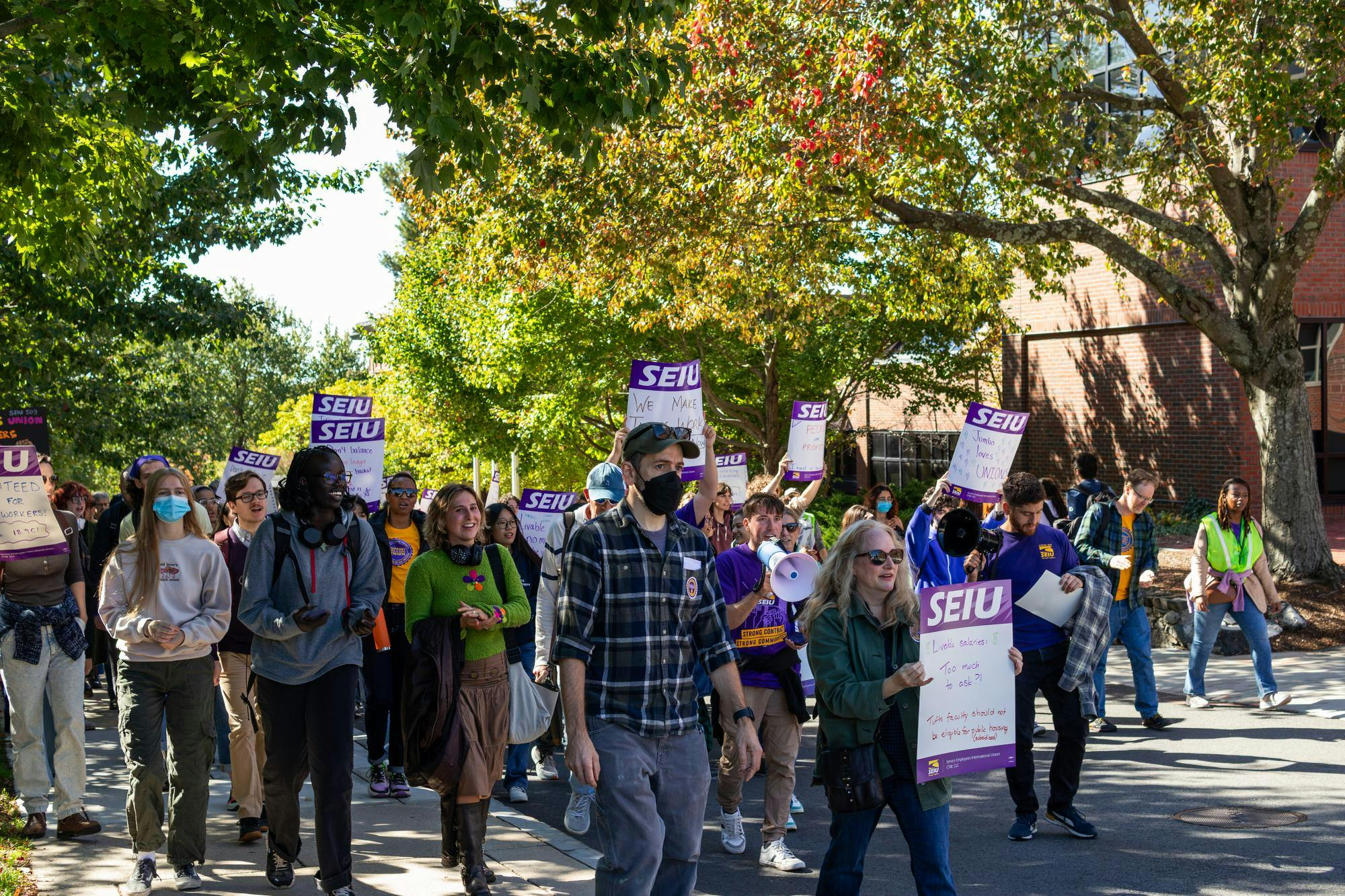
Several developments in labor relations have occurred at Tufts over the past semester, including the ratification of a first-ever contract for professors of the practice at the School of the Museum of Fine Arts at Tufts University, while other Tufts-affiliated unions raised grievances and began bargaining for new contracts.
On Feb. 10, SMFA PoPs and the university ratified a collective bargaining agreement after nearly two years of negotiations. This first contract, which will be in effect for five years, features pay raises for all SMFA PoPs as well as new safeguards for international faculty members.
However, lingering issues related to compensation for extra labor remain. In an Instagram post, the union, SEIU Local 509, shared that the SMFA administration rejected a proposal to provide extra pay to PoPs who participate in additional review boards.
As a result of extended negotiation disagreements, SMFA students signed up for review boards more than two months later than the previous spring semester.
The Tufts Teaching Professors, who ratified their third contract with the university last year after a two-day walkout, also shared upcoming changes to advising in the psychology and biology departments.
On Feb. 20, psychology teaching professors were told that the department would be piloting an ‘embedded advisor’ model for fall 2026 in which a staff member would be responsible for some parts of academic advising. The biology department was informed of this change soon after.
The union argued that this model would force professors in these two departments to “get rid of” most of their advisees due to a lack of additional pay for extra advising.
Phuong Dinh, an assistant teaching professor in psychology, highlighted communication shortfalls from the university surrounding advising changes.
“It’s not yet clear if new incoming majors will declare a major with a faculty member,” Dinh said. “In theory, we’re not cutting all of our advisees by 2026 but our overpay budget has come down to $0 by fall 2029.”
Patrick Collins, Tufts’ executive director of media relations, explained that the two departments were selected for the pilot due to their size.
“This pilot with the biology and psychology departments … will focus on increasing the number of staff advisors, with the goal of improving the student experience,” Collins wrote in a statement to the Daily. “Every student will still have both a staff advisor and a faculty advisor. Students should see no functional change but will benefit from access to staff advisors with additional bandwidth.”
The Tufts University Graduate Union also shared several updates this semester, including alleged contract violations.
The union noted that supervisors at the Department of Biomedical Engineering denied previously approved paid-time-off requests for student workers. At the same time, the English department delayed or incorrectly administered pay to its workers.
In an April update, the union alleged another potential violation related to the School of Engineering’s elimination of a substantial number of teaching assistant roles without notifying the union. The union has formed an action committee in case of escalation.
Throughout the semester, Resident Assistants at Tufts faced a delayed reappointment process, which created confusion, but ultimately resulted in no wide-reaching changes to the role.
“The union had reached out to the university, essentially saying, ‘why are you changing things?’ These are things that need to be bargained for,” Geena Kumaran, the president of the RA union, ULTRA, said. “[The university] ended up backtracking and saying that nothing would be changed prior to bargaining.”
On April 17, the union began bargaining for its second-ever contract. Some of the objectives during bargaining for the union include an increased stipend, JumboCash for laundry, a full meal plan, a microchill unit, air conditioning and continued reemployment, which Kumaran says would streamline the traditional reappointment process.
“Instead of submitting an intent-to-return form, it would be an opt-out form, so you’re automatically contracted for the next year,” Kumaran said.
Starting this summer, the Tufts Facilities Union will also begin bargaining for its next contract with the university. The union is currently distributing a petition that calls for wage increases, reduced healthcare costs and protections for immigrant workers, among other proposals.
In spring 2027, the part-time lecturers will begin bargaining as well. The PTL union includes faculty at both the SMFA and Medford/Somerville campuses.
John Ros, a PTL from the SMFA, explained that the SMFA administration has been asking lecturers to do labor that is more work than they are compensated for.
Ros noted that SMFA administrators have condensed the four studio departments, which has resulted in fewer department chairs. This reduction of department chairs is being filled by ‘area representatives’ who receive less pay for the same work. Still, representative shortages remain.
“With no chairs, there’s nothing, so I can go months without having a solution,” Ros said. “So that’s a huge issue, and that not only affects my teaching, [but] it obviously affects every student in that classroom.”
Fewer department chairs also means that some faculty are being reviewed by officials from the SMFA administration rather than peers.
Despite issues between some of its unions, Collins reaffirmed Tufts’ commitment to honest engagement with its units.
“Tufts approaches its relationships with all unions in a collegial and good‑faith manner, emphasizing dialogue, mutual respect and problem‑solving,” Collins wrote. “As we begin successor bargaining with additional units this semester, we remain committed to productive and respectful engagement that supports our employees, financial stewardship and Tufts’ academic mission.”