“Not a phone in sight.”
This sarcastic quip can often be seen in the comment sections of Instagram and TikTok videos of artists performing on stage, accompanied by a crowd of glowing cellphones. Whether at Coachella, small-scale club shows or sold-out stadium tours, modern audiences have become increasingly accustomed to seeing venues lit up by the gleam of devices.
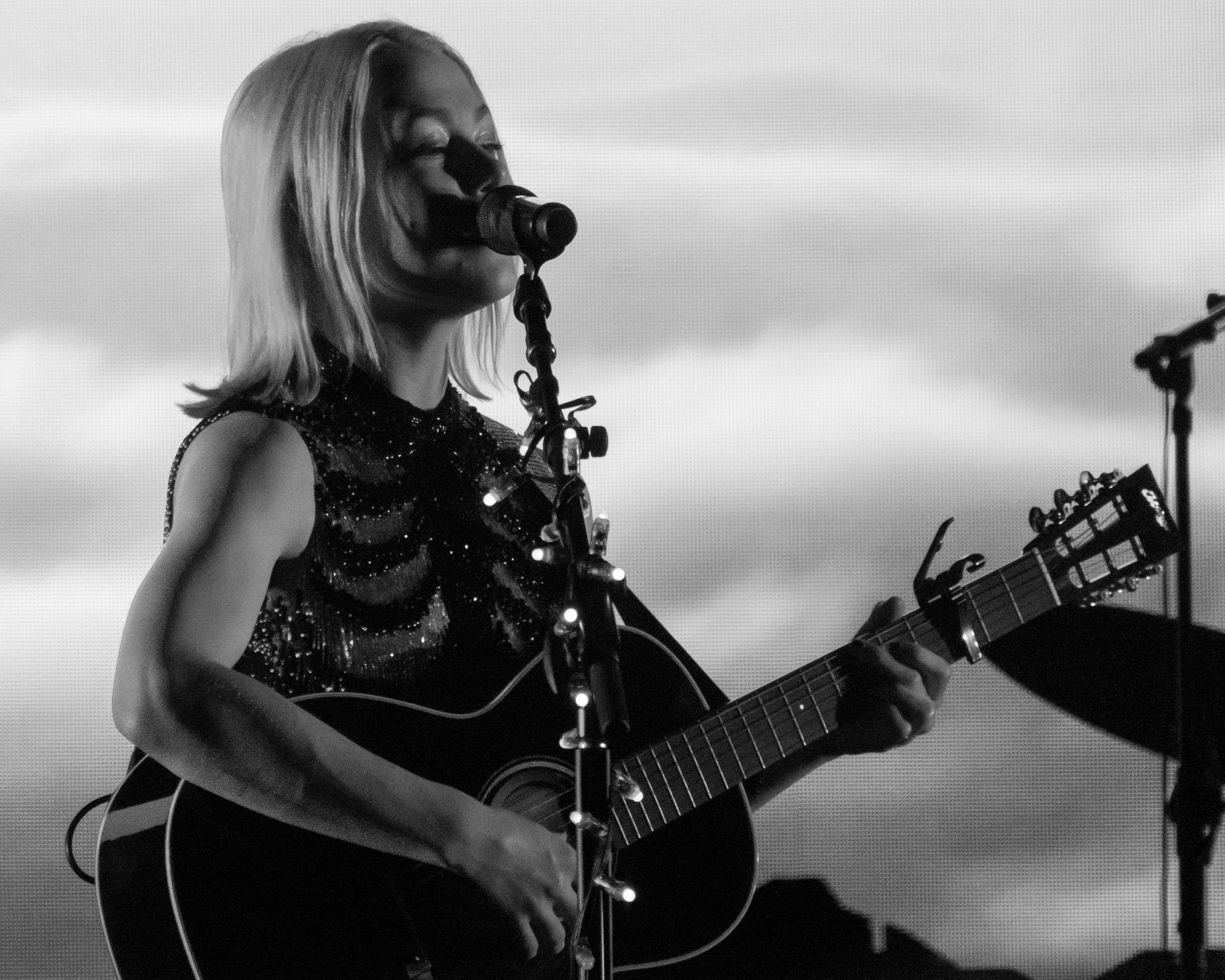
However, four-time Grammy Award-winning artist Phoebe Bridgers’ The Lost Tour has offered a fresh experience: one completely free of smartphones. Her recent stops in Boston on Oct. 6 and Oct. 7 — two sold-out nights at TD Garden — required concertgoers to seal their devices away in Yondr pouches, allowing for full immersion into the concert experience.
Bridgers’ announcement of both the tour and the phone-free rule was cut and dry: an Instagram post with a graphic, tour dates and the caption “I’m going on tour no phones.” The majority of commenters seemed to respect and appreciate the policy, with some joking that they had never even heard of a cellphone, had already thrown out their devices or were about to sell their phone for a ticket.
However, others have criticized this rule, citing a lack of accessibility for attendees with medical conditions that require phone-based monitoring. Additionally, concerns were raised over the exclusion of those who could not afford tickets and look to online footage to experience the show. Still, the shows have designated phone-unlocking areas in the case of an emergency.
Several other notable artists have enforced similar or more lenient phone policies. For instance, Bob Dylan’s multi-year Rough and Rowdy Ways World Wide Tour held a similar rule to Bridgers’, where attendees were required to lock their devices away in the performance area. An example of a different take on this rule is that of Audrey Hobert. The singer-songwriter encourages her audience to put their phones away for the encore of her Staircase to Stardom Tour. As she performs her hit song “Sue Me” for a second time, attendees are invited to dance and sing along without the distraction of a phone in hand.
Still, Bridgers’ phone policy has been more heavily debated. This is likely due to her younger audience demographic, which generally differs from Dylan’s, and the strictness of the ban, which contrasts with Hobert’s more loosely enforced rule. For younger concertgoers, social media has become an increasingly integral part of the music experience. Concert recordings and photographs are used as personal mementos of the show or contributions to the online documentation of live performances.
Despite the absence of this immediate documentation for The Lost Tour audiences, many have taken to social media to share artwork of the concert’s visuals in the form of watercolor paintings, rough sketches, 3D digital art, animations and more. An experience that pushes people to create appears to be a welcome one, with commenters noting their appreciation for the opportunity it brings for artists.
Bridgers’ uniquely vulnerable and introspective music style encourages this invitation to be present; music that inspires listeners to sit with their emotions deserves a live audience willing to do the same. And while the phone-free policy of The Lost Tour is perhaps its most striking aspect, it is just one of many that have shaped the experience into one that is surreal, heart-wrenching and ultimately therapeutic.