
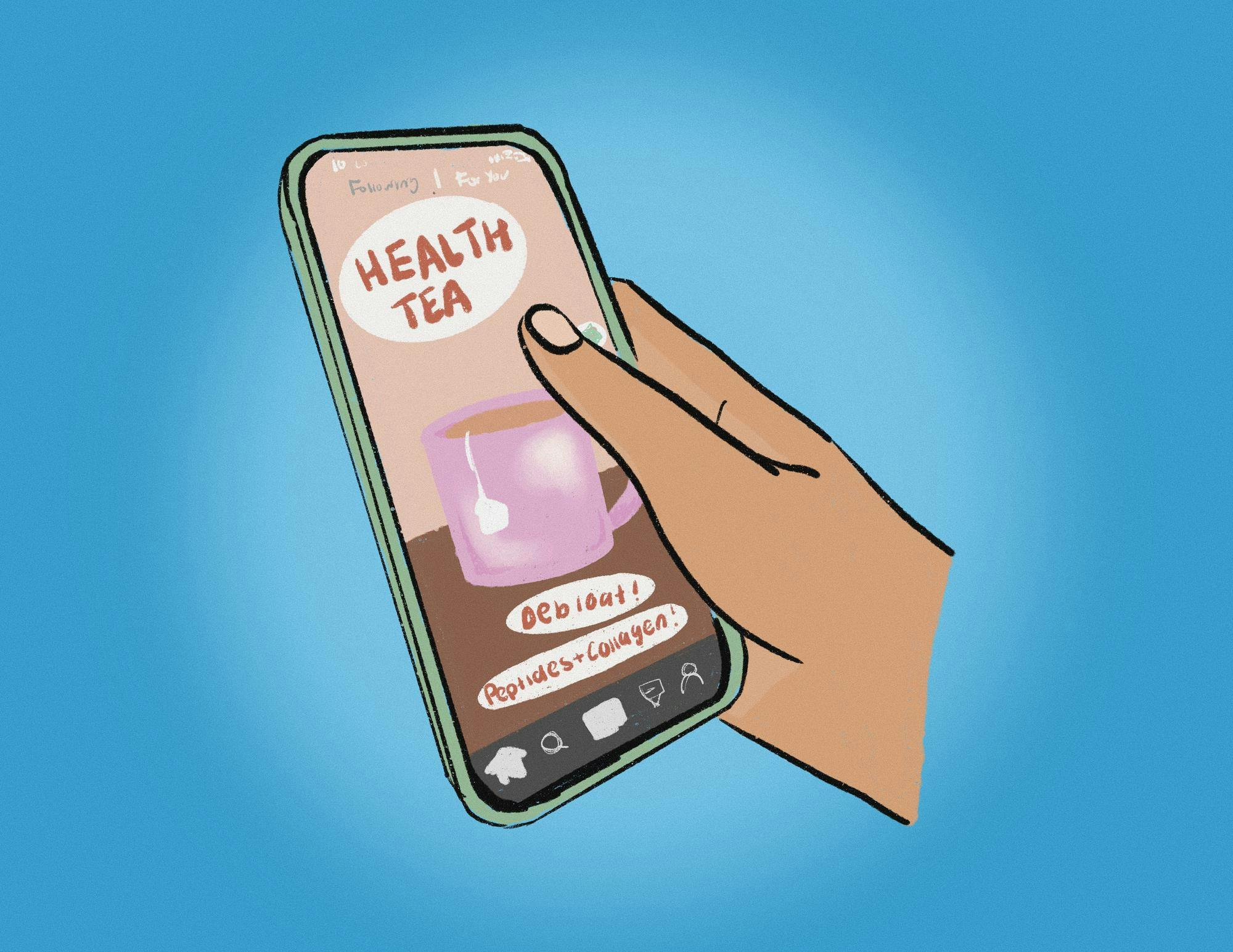
Between supplement stacks for “biohacking” your way to a near-perfect body and mind, “proteinmaxxing” and “fibermaxxing” to improve muscle growth and gut health and using beef tallow as a skincare product, advice on how to live a healthier life is everywhere on TikTok. No matter the topic — skincare, nutrition, mental health, fitness and beyond — what’s considered “healthy” seems to change every time you scroll.
For college students, TikTok can be an easy place to turn to with questions about health. A growing number of physicians and other health professionals have launched successful social media careers, making health content accessible to millions of people. That same platform can also offer a sense of community, where people living with chronic conditions can connect with others and share their experiences.
But the platform’s accessibility also means that reliable, valuable medical information can appear alongside misinformation. In fact, The Guardian’s 2025 investigation reviewed 100 trending TikToks under #mentalhealthtips and found that over half contained misinformation. So, how can you tell the difference?
Here are some things to keep in mind when medical advice comes across your “For You page”:
One of the first things to consider is who is making the health claim. Look for a licensed physician, registered nurse or other health professional with relevant training. While credentials do not automatically make someone’s claims true, they can provide some important context into their expertise.
In addition, be sure to consider where the information comes from. Personal experiences are valuable, but “this worked for me” is not the same as “research shows this works.” An intervention that was effective for one person does not necessarily produce the same result across a broader population.
Look for references to peer-reviewed studies in reputable scientific journals. Consider even looking at the referenced study itself — you may find that the actual research is much less definitive than the TikTok suggests.
The motivation behind a video can offer another clue. Is the creator making this video just to spread health information, or are they also promoting some sort of supplement, fitness program or other product? Videos tagged with #ads are not inherently dishonest, but be aware that financial incentives may influence the information presented. Even beyond ads, always consider if there are any other intentions that may bias the video’s content.
It’s also important to consider how realistic a claim seems. You don’t need to be a medical expert to recognize some obvious red flags: If someone promises that you can lose 10 pounds in a day, then it’s reasonable to be skeptical. Quick fixes and ‘miracle cures’ are almost always untrue.
Lastly, and more importantly, do not stop at TikTok. Always consult another reliable source, and remember that TikTok content should not be considered official medical advice. Ultimately, every person is different, so when it comes to your own health, check in with your primary care provider. An apple a day may keep the doctor away, but a TikTok a day (or 100) should not.



