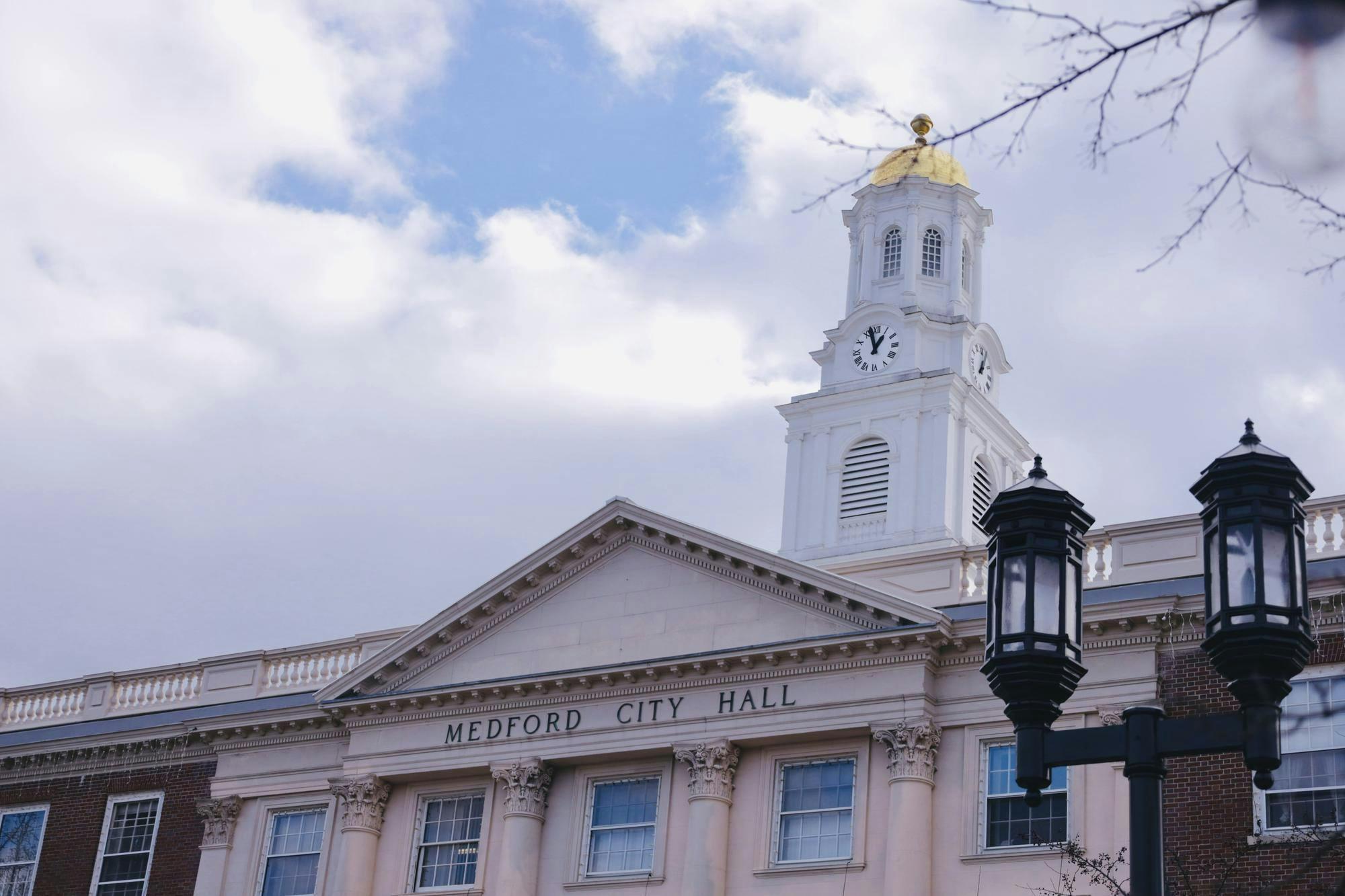
The large-scale rezoning of Medford has been indefinitely paused as the city’s contract with Innes Associates, the zoning consultant partnering with the city, expires.
The pause comes amid growing opposition to the rezoning project. While proponents argue that the zoning changes will increase affordable housing, many residents have criticized a lack of clarity around the project, arguing that it will diminish neighborhood character and increase population density.
In July, City Council President Zac Bears delivered an address before the City Council’s Planning and Permitting Committee calling for a “shared path forward” on the rezoning process. The proposed plan would slow the rezoning process and ask Medford Mayor Breanna Lungo-Koehn to extend Innes Associates’ contract and improve communication with the public.
Bears commented on the urgency of the rezoning efforts while also stressing the need for improved outreach to Medford residents.
“I think my statement really reflected that the council has been encouraging and pushing the mayor to be more involved, to provide more resources, to help us do more outreach. I hope we can get there because we need to get this done,” Bears said.
Lungo-Koehn released a statement on July 31 in response to Bears’ proposed plan, saying she appreciated his calls for transparency but stopped short of fully agreeing with his proposal, including his request that she unconditionally extend the Innes Associates contract.
“My request back is that I be part of that shared path,” she wrote. “At this time, I am not prepared to agree to all of the asks that were made as I have no guarantees or commitments that this new slowed approach will be adhered to.”
Lungo-Koehn had previously written a letter in June to the Medford Community Development Board, which is responsible for deliberating on the zoning proposals and sending them back to the City Council with recommendations. In the letter, the mayor requested that the residential zoning proposal be postponed.
“Due to the complexities of this project, as well as the speed at which this process is moving, I believe our community needs time to be better informed about the impact of the residential rezoning and the opportunity to comment on the proposal,” she wrote.
To keep the project moving forward while addressing resident concerns, Bears suggested completing the rezoning of commercial areas, street corridors and parking policy this year. He also proposed moving the review of the residential component — which includes upzoning certain areas to allow for larger housing developments — to at least the spring of next year.
Applying higher density designations to certain areas, known as upzoning, has drawn the ire of many residents and galvanized a movement against many elements of the rezoning.
Trish Schiapelli, a Medford resident and candidate for City Council this year, called the rezoning “radical” and worried about the loss of neighborhood character and property rights.
“Zoning ordinances have a valid legal interest in protecting the character of the neighborhood, not destroying the character of the neighborhood,” Schiapelli said in an August interview with “Medford Happenings,” a community-access show. “When you buy a home, you are entitled to certain rights, and that right is that you have a say in the neighborhood that you live in.”
Proponents of the rezoning project claim that miscommunication about the proposed changes has been a major obstacle in garnering public support. City Councilor Matt Leming said that the complexity of the issue has made it easier for misinformation to spread.
“It is very easy to mischaracterize something that is complicated. It’s like trying to explain the mechanisms of a fine watch,” Leming said.
In her response to Bears’ statement, Lungo-Koehn conditioned the extension of Innes Associates’s contract on a list of requirements, including revisiting elements of the rezoning that had already been enacted late 2024 and this year. Specifically, she asked the City Council to reconsider story maximums on Mystic Avenue, which are, in some areas, 14 stories — much higher than other zoning proposals.
Leming said Lungo-Koehn’s requirements to revisit elements of the rezoning project were unrealistic.
“What we planned out and what we put out a timeline for at the beginning of this past term, earlier in 2024, was to divide it into 10 different pieces and do those pieces one by one,” Leming explained. “Putting out a public statement saying that council has to undo the parts of this ongoing project that we’ve already done … is not something that I can get behind.”
According to Leming, there is an overall consensus that the residential rezoning proposal be delayed. Lungo-Koehn said on Aug. 7 that she hoped a new timeline for the residential rezoning proposal would be released after Labor Day.
“I’d really just like to see more resources so that the city can reach out to residents, let them know what’s going on and hopefully get more support from City Hall when it comes to that outreach campaign,” Leming said.