
As the effects of climate change become increasingly visible, cities face unique challenges but are also positioned to be leaders in sustainability and adaptation. Some of the most prominent effects of climate change in cities include rising sea levels and increased temperatures — as well as higher rates of heat waves — which are exacerbated by the urban heat island effect, where urban areas experience warmer weather than rural areas. Urban areas also experience greater food and water scarcity than their surrounding areas.
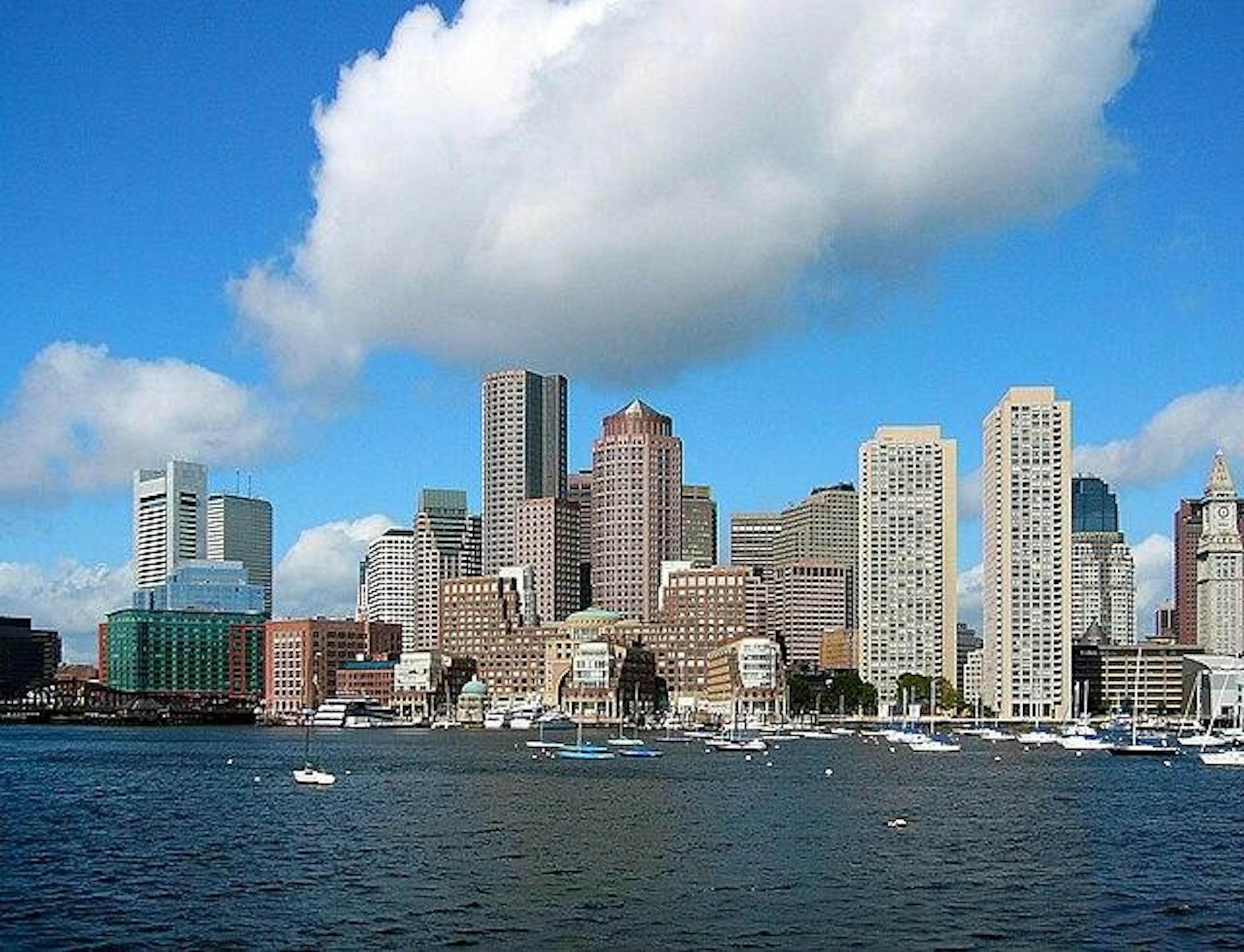
Flooding is an issue that threatens Boston specifically, but this risk is not shared equally. The communities that are the most susceptible to flooding are Boston’s low-income neighborhoods in public housing projects that were built on landfills. It’s also possible that the Amelia Earhart dam, which separates the Boston Harbor from the Mystic River, could be overwhelmed by 2050. According to the 2025 Medford Climate Change Vulnerability Assessment, these hazards are most likely to impact “adults over 65 years old, children under 5, people with limited English proficiency, people of color, people of low and moderately-low income, people living with disabilities, and people with less than a high school education.”
Sea level rise is not the only impact of climate change that Boston must face. In Somerville and Medford, models are projecting an increased number of days over 90 degrees Fahrenheit in the summers and increased precipitation intensity, which means that although the total precipitation may not drastically increase, we’ll have more rain in shorter periods of time, making flooding more likely.
In New England as a whole, we’re also seeing increased cases of vector-borne diseases, such as Lyme disease, and declining snowmelt, which impacts crucial water sources. On top of this, there are also changes in the timing of the seasons and foliage, which means fall is coming later and more erratically. This could directly impact the revenue from tourism that New England relies heavily upon. Additionally, New England’s oyster and lobster industries are also in trouble, as these species are incredibly temperature sensitive and have already begun to migrate north to Canada.
While cities produce 70% of the world’s carbon footprint because of their high levels of population density, this also provides the opportunity to be pioneers in resource efficiency. At their best, cities can serve as hubs for innovative sustainability by investing in climate-friendly infrastructure.
Take, for example, the city of Lima, Peru, which has recently implemented fog-catching technology and automated irrigation to try to address the issue of water scarcity. While fog capture has not fully solved the issue of a lack of clean drinking water, local organizations successfully centered local communities and proved that fog is a viable water source that can help address the lack of adequate water infrastructure. This technology is even more valuable given that Lima is one of the world’s only megacities located in a desert.
Another prime example of sustainability in cities is Stockholm’s public transportation system. Stockholm’s public transportation has run completely on renewable electricity since 2017, making it a pioneer in clean energy and one of the first cities to switch fully to carbon-neutral public transportation. This drastically improves the city’s air quality by reducing the amount of carbon dioxide and volatile organic compounds that are emitted. The process began in the ’80s when many still struggled to believe that climate change was a problem that needed to be addressed through urban planning. Now, they are aiming towards fossil fuel-free maritime traffic by 2030, demonstrating an impressive commitment to clean energy in all areas.
In Boston, Medford and Somerville, there has also been a push to implement more sustainable technology. For example, the MBTA claims to have a plan to switch to fully electric buses by 2040. Furthermore, Boston is not only focused on mitigating emissions but also on adapting via the Climate Ready Initiative, with detailed plans in place for each of their five coastal neighborhoods. This has been done through raising street levels, building berms and requiring that condominium developments on the harbor install ‘aqua fences,’ which are similar to sea walls — all necessary steps considering that the pace of sea level rise in Boston is expected to triple.



