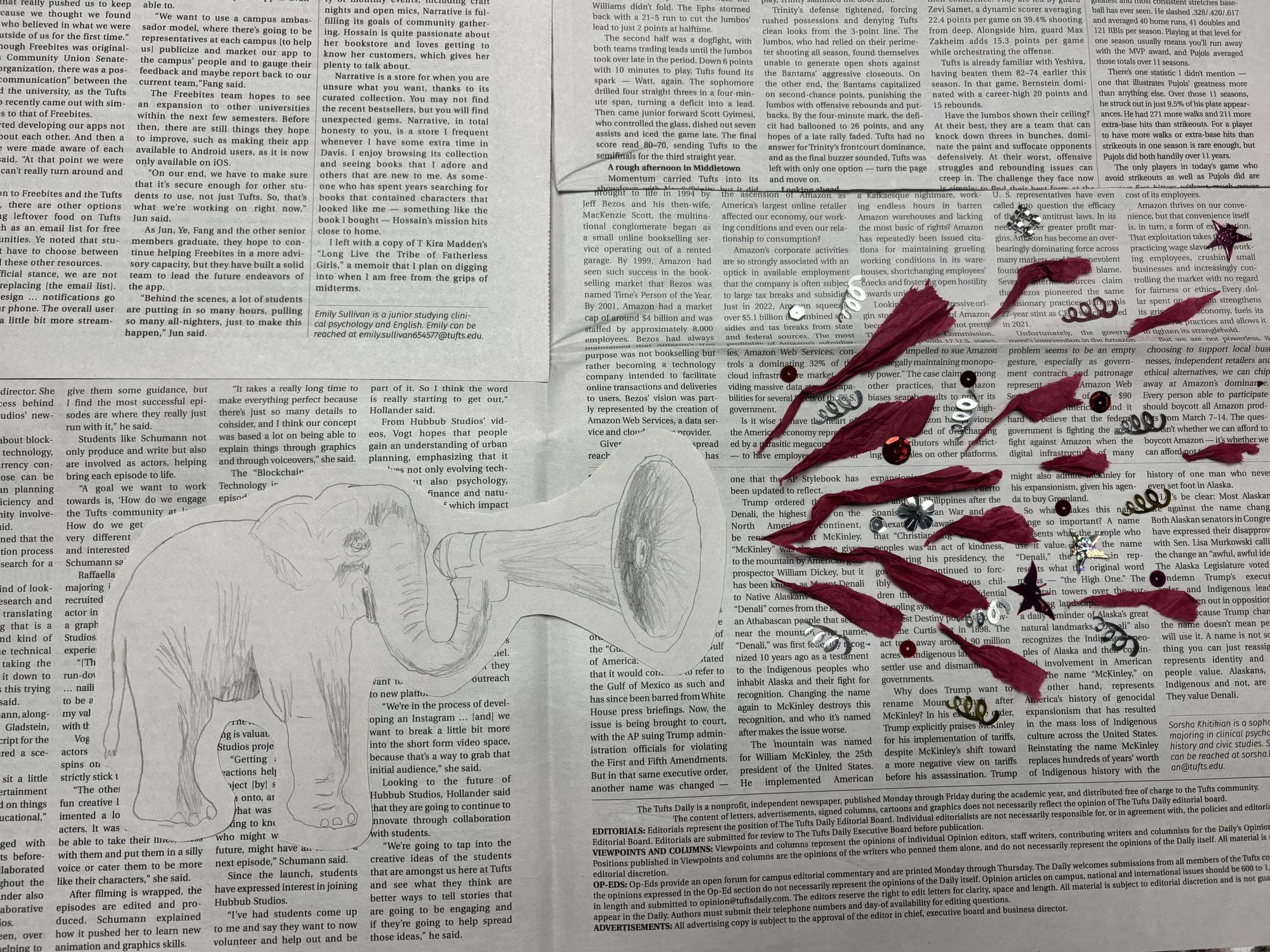
On July 24, President Donald Trump’s Rescissions Act was signed into law, stripping over $1 billion in allocated funding from NPR and PBS and marking a dark day for public broadcasting. From providing educational programming like “Sesame Street” to delivering breaking news, public broadcasting has long served as an integral part of American life across all divides and is a vital resource to staying informed.
The defunding of public broadcasting comes at a perilous moment in journalism. In 2024, more than two newspapers closed per week across the country, and over 3,200 print newspapers have ceased operation since 2005. Local journalism has been hit particularly hard: A study found that over 1,500 U.S. counties have only one local news outlet. In Massachusetts, dozens of towns have been left with “ghost papers,” where residents have little to no access to local news reporting. It can be easy to write off the losses of these smaller newspapers and media organizations, especially in the Boston area, where news is often covered by multiple outlets. Yet, from their role in emergency warning systems to being the first to break national stories, these journalists are vital both within their local communities and beyond.
Access to local news is also imperative for maintaining a healthy democracy: It is found that areas with limited local reporting are less civically engaged than areas with more robust journalism. To maintain informed participation, people need to be able to read widely across different newspapers, rather than being financially constrained to only the angles and viewpoints presented by free, non-subscription outlets. The lack of local, free media can, in turn, deepen disparities in civic engagement between regions with and without community journalism, and disproportionately harms low-income communities that cannot afford the paywalls that larger newspapers require.
As one of the primary local news sources serving the Medford and Somerville area, the Daily must do its part in this critical moment. We should all be concerned by the attacks against journalism and the subsequent effects on our community and across the nation. As Tufts’ only independent student newspaper, we believe it is imperative to call on our community and broader readership to support journalism during these times, especially for news organizations that remain free to access. The Daily’s Editorial Board recognizes several ways to do this:
Firstly — and perhaps most easily — seek out news from trusted and balanced outlets as opposed to relying on social media. One of the main reasons for the decline in traditional newspapers is the increase in people exclusively getting their news online, such as from social media sites like TikTok and Instagram. For individuals with access to a local newspaper, they should make an effort to diversify their current media consumption with those sources.
From a faculty perspective, professors who assign news readings should consider including articles from smaller papers in their syllabi. While major news outlets like The New York Times and The Washington Post offer credible reporting and incisive analyses on important socioeconomic and geopolitical matters, students can also benefit from the nuance and contexts provided by local reporting.
We also call on the university to expand media access to its students. Beyond offering the Times and The Wall Street Journal, Tufts should provide direct access to local sources such as The Boston Globe. Being engaged and informed citizens starts with the media we consume. Information should be a right, not a privilege.
Finally, for those with the financial means, consider donating to a local news station. Following the defunding of the Corporation for Public Broadcasting, former NPR journalist Alex Curley launched Adopt A Station to help preserve access to public media. Interested donors are connected to stations that have lost 30% or more of their funding to help support their work. Even if you can’t donate, using social media to amplify organizations like Adopt A Station is a meaningful way to support journalism.
Supporting public media is not just about protecting journalism; it is also about protecting an informed public that institutions like Tufts strive to create.