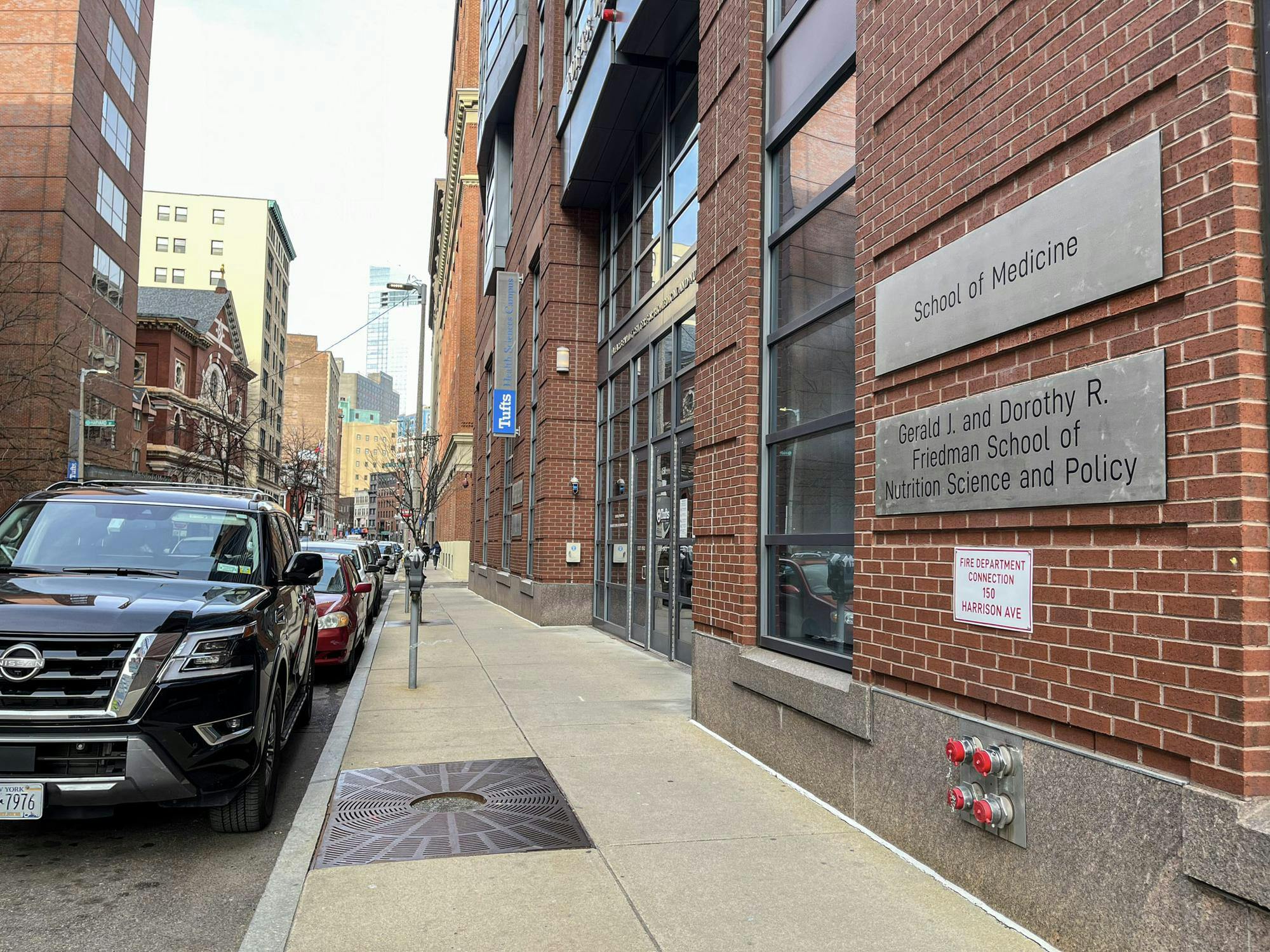
Applications for a new joint master’s program, Applied AI for Food and Nutrition, opened on September 16th. The course is a collaboration between the Department of Computer Science in the School of Engineering and the Friedman School of Nutrition Science and Policy. Applied AI for Food and Nutrition is a completely online program that requires no advanced technical background to apply.
Elena N. Naumova, professor of the Division of Nutrition Data Science at the Friedman School, shared aspects of the new joint master’s program.
“The M.S. in Applied AI for Food and Nutrition is a 30-credit, fully online master’s program that integrates artificial intelligence with nutrition and health sciences,” Naumova wrote in an email to the Daily. “The curriculum combines technical training with domain-specific applications, preparing graduates to use emerging technologies in practical, ethical, and impactful ways.”
She also discussed the learning goals that students can come to expect once they enroll in the program.
“Students will develop skills in AI and machine learning while learning how to apply these tools to challenges in food systems, nutrition research, public health, and related fields,” Naumova wrote.
The Friedman School and the School of Engineering have a long history of collaboration, with each school complementing aspects of the other.
“Bringing these strengths together,” Naumova wrote, “creates a unique opportunity to train professionals who can apply AI responsibly and effectively to problems in food, nutrition, and health.”
As artificial intelligence continues to develop and become more applicable in daily work and education, the program directors hope to prepare students for the AI landscape and teach them how to use it as a tool.
Karen Panetta, electrical and computer engineering professor as well as dean of graduate education in the School of Engineering, explained the concept behind the new program.
“This program is crafted so that we can finally get AI into disciplines that traditionally would never even think about it because we want our students to be at the leading edge of everything,” Panetta said.
When asked about students’ concerns and reservations about the program’s focus on AI, she stated, “Don’t let the name mislead you. It’s really about being able to quickly utilize technology to deploy useful applications that help you implement things for health and nutrition.”
Students enrolled in the master’s program will also have access to outside opportunities to apply what they are learning in the classroom and gain hands-on experience.
“Because this [program] is administered through the School of Engineering, they get to use our master’s co-op program,” Panetta said.
According to her, the graduate co-op program is a six- to eight-month immersive experience in an industry, not just a summer internship.
The master’s assumes no previous knowledge of AI or computer science, making the program more accessible to those who may not have experience but do have a curiosity and interest to deepen their knowledge on the subject.
“We know that not everybody’s going to come in with a STEM background, so we need to make sure that the courses that we put in play for the technology piece are conducive to people’s backgrounds and remove that intimidation factor,” Panetta explained. “That’s why we’ve come up with a core suite of what I would call AI computer science courses that help bridge that learning gap.”
Junior and computer science major Jess Charalel, while not personally looking to pursue the program, believes that it could be beneficial to students.
“I love to hear the different ways that computer science can be used [instead of] just raw tech,” Charalel stated. “I think it’s interesting to apply [computer science] to different fields that you wouldn’t really think of that often.”
Charalel has some reservations about the incorporation of AI, claiming that it may be too niche for a joint master’s program.
“If we’re just exploring the intersection of computer science in general and food nutrition, that would intrigue me more,” she said.
On how students can prepare for the joint master’s program, Naumova wrote, “I would encourage students to build strong foundations in both quantitative methods and the life sciences, remain curious about emerging technologies and ways we learn, adapt and grow, think critically about how AI can be used to address real-world challenges and how we can establish and maintain proper guardrails against the harmful use.”
Besides simply crafting their undergraduate studies to prepare for the joint master’s program application, Panetta encourages students to think about their interests and passions.
“It’s more about finding interests,” Panetta said. “Part of it is thinking big about what it is you really want, and how this is a stepping stone to get you there.”