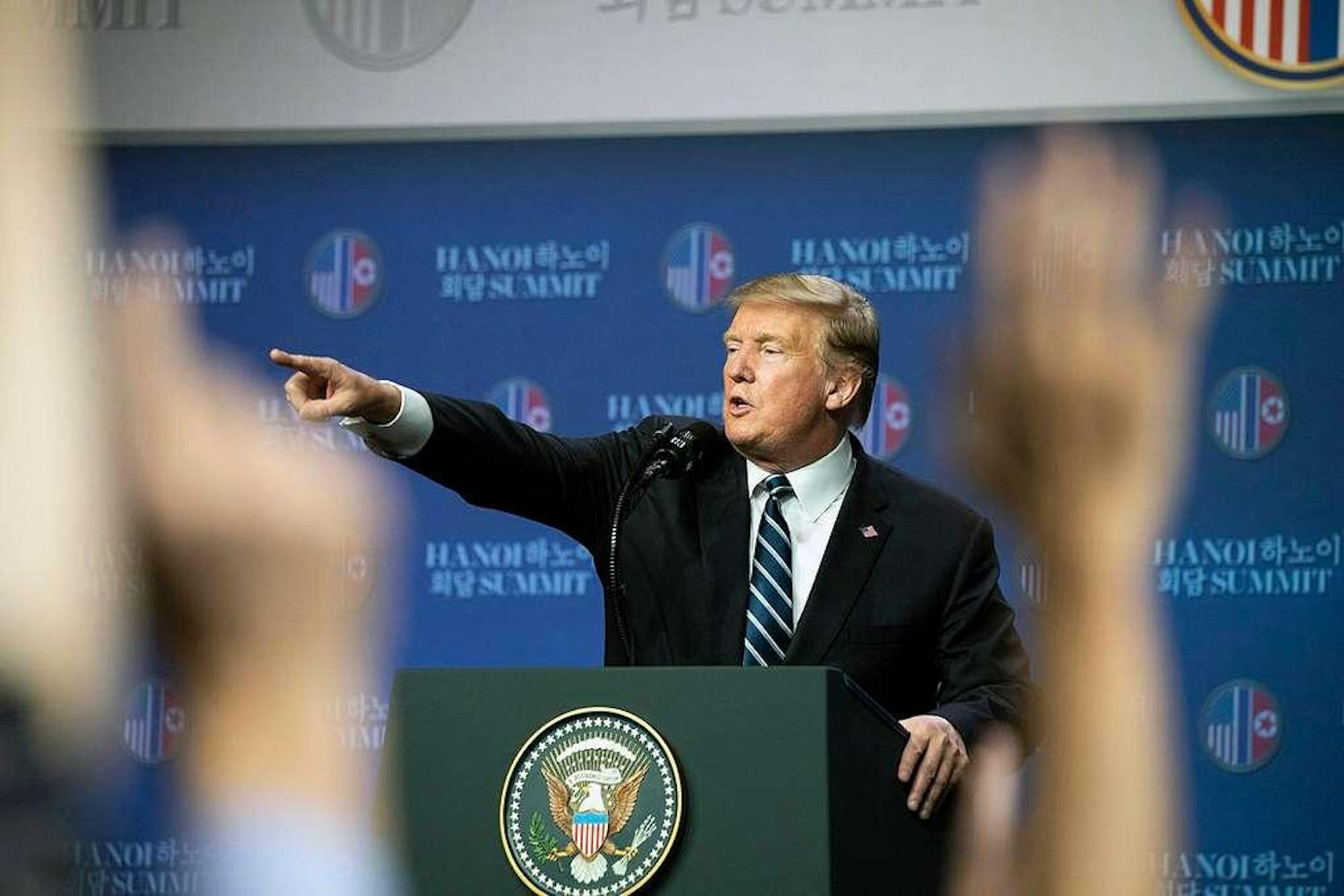
In her very first briefing as Press Secretary, Karoline Leavitt informed the room of media outlets and print journalists that they now “[had] access to the most transparent and accessible president in American history.” She continued, “There has never been a president who communicates with the American people, and the American press corps, as openly and authentically as the … 47th president of the United States.”
Leavitt, President Donald Trump’s first chief spokesperson of his second term and the youngest person to hold the role, was repeating a claim that emanated from the very center of the White House. With social media posts, website page headings and Cabinet officials on TV, the messaging strategy was clear: The Trump administration would bring a new air of legitimacy and trustworthiness to the country’s highest office.
And yet, Trump has repeatedly dodged questions by calling reporters names, left interviews midway through after being challenged on his answers and allegedly pressured media outlets to pull stories that made the administration look bad. How could the White House even begin to defend its claims of “transparency”?
Their answer, in large part, seems to have been Truth Social, a social media platform launched by Trump in 2022 after he was banned from other major social media platforms. Ostensibly, via Truth Social, Trump has been more accessible than any other president. To be fair, Trump is definitely the only president to have successfully fired off over 100 social media posts in one day and, in a more concentrated range, 72 social media posts in 10 minutes. The question, however, is whether this consistent access to Trump’s posts actually constitutes transparent governing. The administration’s attempts to ban CNN, MS Now and Politico from the White House press pool are the latest in a long line of clear signs that the answer is a resounding ‘no.’
Authenticity, after all, isn’t purely a numbers game. Sure, it’s novel to have intimate knowledge of the president’s sleep schedule (or lack thereof). And no other president has shared their favorite videos of people being mauled by tigers. But there is a clear disparity in depth between these frivolous posts and the actual information that the people of the United States deserve to know.
When will the war in Iran end? Will Trump try to deploy Immigration and Customs Enforcement to midterm voting locations? When are gas prices going down? This is what the American people are demanding to know, and no amount of misdirection is going to appease the voters who feel that the government is no longer working for them.
Even regarding the White House press pool ban, the administration has failed to give us a straight answer. The Justice Department originally attributed the ban to national security concerns, and after the initial claim fell flat, eventually claimed that the coordinated response of the media outlets to boycott pool coverage amounted to a violation of the Sherman Antitrust Act. Trump, on the other hand, has publicly admitted that the ban was motivated by the outlets’ negative coverage of his administration. As per usual, the only clarity amid the administration’s hazy messaging is that we’re not likely to get a straight answer anytime soon, if at all.
It’s no wonder Trump is facing historically low approval ratings and shockingly pessimistic midterm election projections.
A free press is central to a thriving democracy. Trump’s latest attempt to ban CNN, MS Now and Politico is the latest addition to an already overflowing bucket of proof that we’re being led by an administration more dedicated to self-service and retribution than to the upholding of our democratic values.
Transparency is not a complex word — we should be appalled that the most powerful people in our country are pretending to misunderstand it.