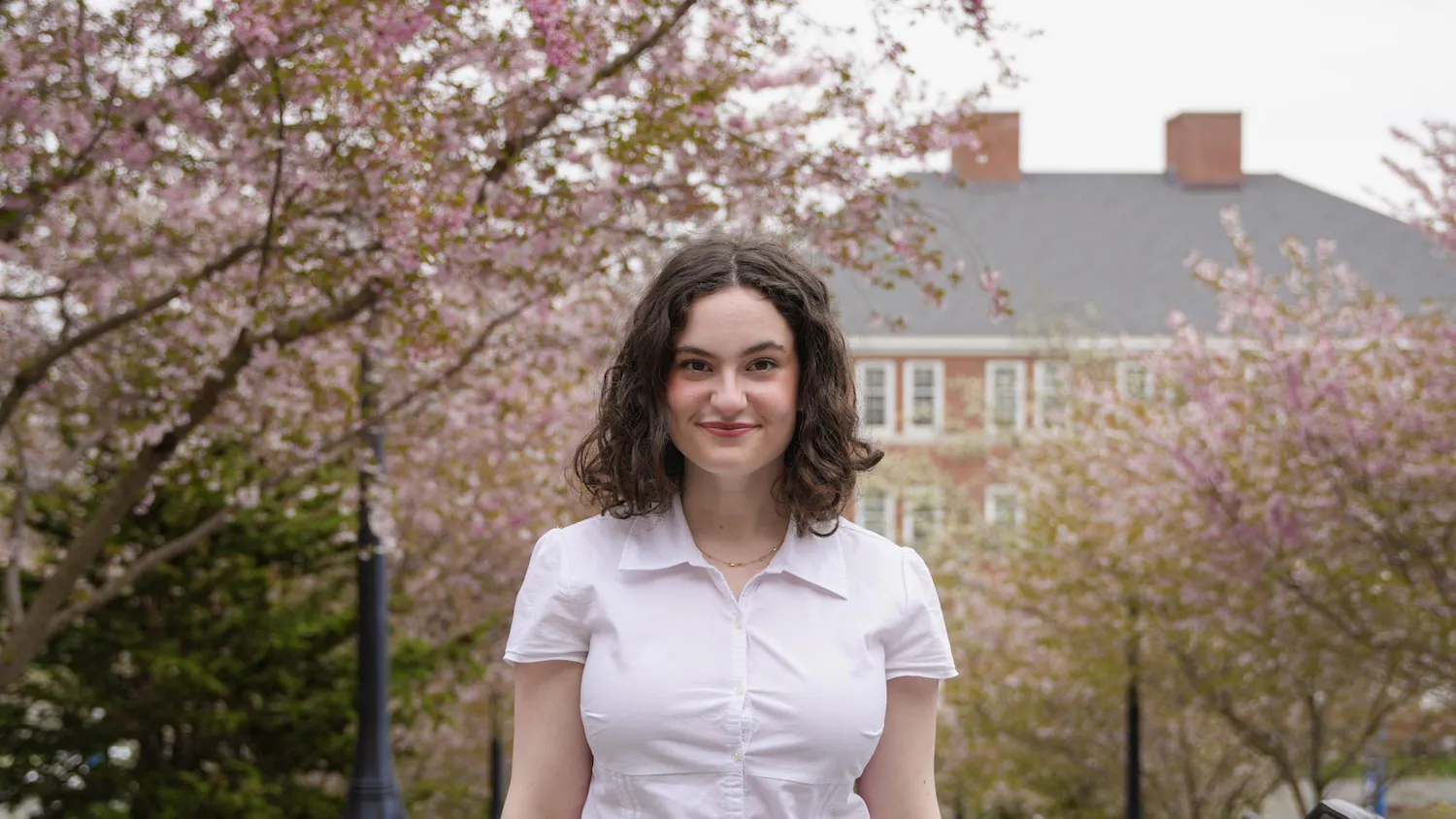
Over the past week, the Daily spoke with three students who grew up in the Southern states. The conversations revolved around their upbringing, their relationships with home and the effect of their background on their interactions with others on campus.
Several themes resonated across all three students. They all discussed how their Southern identity has grown stronger in their time away from home, even if they did not necessarily relate to that identity before college. They also spoke about some of the false stereotypes that others hold about their home states and the South in general.
However, these interviews are not representative of all students from the South or Southerners at large. These students shared stories that were deeply personal, and all three echoed the thought that their experiences are but one among many, not just in the South but also within their respective Southern hometowns.
Schuyler Link
Schuyler Link is a junior majoring in biomedical engineering. At 10, he moved to Houston, Texas and has since called the southwest region of the city his home. Born in Portland, Ore., Link recalled being struck by the ferocity of Texas' summers when he moved there.
"We moved in August, which was the first mistake. As my parents are moving everything in, they ask my sister and I -- we were 10 at the time -- to go play outside, see if anybody is around. We go out there for five minutes and come back in, drenched in our own sweat," he said.
Link attended a private Catholic high school in Texas. He was the self-described "hippie" of his high school.
"Everybody knew that I was pretty liberal-leaning. While a lot people may range from moderate to not really caring, I was just aggressive about it," he said.
While he appreciated the small size of the school, he could not relate to the overtly religious activities in which students were compelled to participate.
"We would have Mass once a month -- that was more fun than a barrel of drunk monkeys. It lasted so long," Link said. "After a while of them trying to tell me the same thing that I'm not on the same wavelength about, I just tune out, since it all doesn't matter for me anyway."
He noted that this experience cannot be generalized as the stereotype of living in Texas. Like most cities, Houston is diverse in culture, politics and religion.
"The diversity of [Houston] does come with a diversity of opinion, so as much as there were aspects of the sort of Texan attitude -- just guns, horseback riding and hunting -- that wasn't what everybody did," Link said. "You are going to run into [diversity] in other large cities in the South too."
Link himself grew up around neighbors who came from different backgrounds than his family.
"The person across the street, I think they were Hispanic. Our next door neighbors to the left were from India, and the ones to the right are Jewish," he said.
Link said that he has not faced any overt stereotyping of his Southern background in his time at Tufts. However, many people who he has met are simply not familiar with the region in general. He shared an anecdote of his fencing team talking about traveling to Tennessee for nationals.
"Nothing specific was said, but I felt like there were some subtle intonations about it being Tennessee -- a combination of [it being in the] middle of nowhere and backwards," Link said. "The way that people would say 'Tennessee,' you feel a little bit of that vibe."
Moving up north for college has given Link some insight into the cultural differences between the South and the Northeast. He observed that while Southerners are generally friendlier with strangers, people in the Northeast tend to have a more hurried attitude.
"Frequently, if you're trying to flag someone down here, they give you this look that reads, 'Why in the world are you trying to talk to me?' Whereas, in Houston, everything is more leisurely because if you're trying to move at any appreciable pace, you'll die of exhaustion because it's so f---ing hot," he said.
As someone who does not identify completely with the "Texan attitude," Link sometimes introduces himself to others as being from Oregon rather than Texas.
"If I mention to somebody that I'm from Texas, [I feel that] it immediately puts me in a very specific group of people: country-type with cowboy hats, gun-loving, horse-riding -- that whole thing," Link said. "With Oregon, you don't really get that many questions about it, and that's sort of useful ... I can get away just under the radar without bringing too much attention to myself if I don't want it."
Nevertheless, many of his friends still see him as Southern, even though he is not originally from Texas.
"Sometimes I try to play it down and say that I've only lived in Texas for 10 years, but my friends all respond, 'Yeah, you are from the South,'" he said.
Link chooses to not let his Texan upbringing solely define his behaviors and identity. Instead, he ascribes more of his personality to the activities that he participates in.
"I'm a STEM student ... so that's the first part of what I think about personality-wise," he said. "[Being from Texas] comes up a little bit later, and I'm not sure how much it actively feeds into anything, except for a few mannerisms."
However, being part of the minority of Southern students on campus has also led him to mention his geographical background far more regularly. At Tufts, only about 12 percent of undergraduate students come from the 17 states defined by the U.S. Census as the South, according to data provided by the 2016-2017 Fact Book from the Office of Institutional Research and Evaluation.
"It might have made me use [coming from Texas] more as an identity," Link said. "From the psychological perspective, if you're in a place where a lot of people have the same characteristics, you automatically search for the one that is unique to yourself, and that tends to be being from Texas."
Camille Jackson

First-year Camille Jackson is from Oklahoma City, Okla., where she has lived all her life. When other students find out where she is from, Jackson said they frequently react with astonishment. She recounted two instances where she had to deal with unexpected questions about her home state.
"They always ask if Oklahoma is the home of the Thunder -- that's our most well-known fact," she said. "Someone actually asked me if we had actual roads, if we did not just have dirt roads. Well, we have actual roads. We were not left behind in the olden days. We came with the times."
Although Oklahoma City is the largest city in Oklahoma, Jackson described it as small and rather quiet.
"You see maybe 20 people each day who you know personally ... our downtown is not very big," she said. "Pretty much the only things to do are school functions or sporting events. It's one of those places where you make your own fun. There's no real attractions."
The city may be small, but Jackson said it fosters a sense of community even between complete strangers, which she appreciates.
"People are definitely a little more friendly in Oklahoma, so it gives a bigger sense of community, because just on a baseline everyone says hi to each other and asks how each other's doing, regardless if we know the person or not," Jackson said.
Even if 'Oklahoma hospitality' is a stereotypical notion, Jackson truly misses the communal activities that dominated social life back home.
"If it wasn't going to a sporting event, it was maybe going to an eatery, because there is a plethora of food places in Oklahoma, so everyone tends to meet up and just go eat somewhere," she said. "I kind of miss that."
In contrast, she observed that Bostonians tend to mind their own business more.
"Everyone has some place to be, no one's just hanging around," Jackson said. "[I'm] not saying that people here [in Boston] aren't as friendly as people in Oklahoma, it just seems like they won't go out of their way to make someone feel more welcome. You just have to find your own place here."
She also noted that while the community in Oklahoma City was closely knit, it was also exclusive and difficult to join as an outsider.
"[Oklahoma] is such a communal place, and if you are not in that community, you're more or less an outcast," Jackson said. "Everyone's kind of related to everyone, and the roots go back very far in Oklahoma. Everyone lives in the same little neighborhood, at least in my area. Everyone tends to talk amongst themselves in that microcosm. It's hard to penetrate into that."
This exclusivity pervaded day-to-day social interactions in Oklahoma, which made Jackson's ethnically diverse high school friend group the exception rather than the norm.
"Groups like that do happen [in Oklahoma], but it's not something you'll necessarily see on the day-to-day," she said. "And when it happens, people do take a second glance. That's not because it's unwanted -- although I can't speak for everyone -- but it's because there's such a small amount of diversity, so that forces a group mentality on people."
She compared this to her experience with social interactions on Tufts' campus, where she observes more diversity than back home.
"At least for me, coming from [Oklahoma], I see a lot more diversity here," Jackson said. "It's not the fact that they don't see race ... but it's the fact that it doesn't matter, which is different from Oklahoma."
Jackson acknowledged that people living in Oklahoma definitely place more emphasis on following the status quo and creating a distinct way of life in the state.
"I'm not going to say that Oklahomans are not forward-thinkers, but they definitely think of things in a more traditional way -- this is how things are, so this is how things have to stay," Jackson said. "We don't really stray from what we're doing, which is very different from other places, as I've found out."
To seek a different environment and new opportunities, Jackson felt compelled to travel outside of the South for college. Her mother, in particular, wanted her to experience life outside of Oklahoma and broaden her horizons.
"Nothing new really happens in Oklahoma. Everything is just a cycle that keeps repeating itself. On top of that, my mom banned me and my brother from staying in-state, so we were forced to venture out," Jackson said. "Her point was that since we grew up [in Oklahoma] our whole lives, we should leave for college. ... She saw that we needed that opportunity to see what else is out there and to know that Oklahoma isn't everything."
Jackson's parents grew up in Norman, Okla., 20 miles south of Oklahoma City. They both left Oklahoma for school and to start a family, before returning to Oklahoma City to raise their children. As a result, Jackson's southern roots have not defined her identity.
"I never related too hard to the Southern ideal. In that sense, I don't do many of the things that are considered Southern," Jackson said. "[My parents] lived in D.C. and then Albany for a while, so they really like the feel of these places and brought those [Northern values] to heart. That's how they raised me and my brother."
Nonetheless, Jackson said that she and her Tufts friends, who come from all over the country, each bring a piece of home into their friend group and their conversations, even if it's something that they do not focus on.
"Where we are from has patterned our way of thinking, so with that we bring our ideals with us, and those differ from each other," she said.
Abigail Schmidt

Abigail Schmidt is a sophomore majoring in music. When Schmidt was five, she moved from Austin, Texas to the town of Dripping Springs just 30 minutes away, where she lived until her high school graduation.
"It is definitely a very small town," she said. "There's a Facebook group called 'Dripping Springs Neighbors,' where everyone gossips. It gets really petty, but it's kind of entertaining. I'm still a member of it, because I really like to keep up with the small town drama. It definitely is an everyone-knows-everyone place."
Schmidt finds it simpler to strike up a conversation with people on the streets and easier to trust strangers in Texas.
"If I'm in a coffee shop in downtown Austin, I could leave my computer on the table and go to the bathroom more easily than I could in downtown Boston," Schmidt said. "There's definitely more interaction with people you don't know [in Texas]. We would always meet interesting strangers growing up. Maybe I have been looking at it through rose-tinted lenses ... but it was nice meeting cool people."
As Schmidt did not identify with the political or cultural views of many fellow Texans, she felt an urge to head up north for college.
"While I was living [in Texas], since my parents are from the North, I wanted to move and I did not feel like I belonged," Schmidt said. "[I] painted the Northeast as this liberal utopia where some of the things we had to deal with -- i.e. homophobia, sexism -- we thought would go away."
Her experience with religious diversity at Tufts so far is something that she treasures deeply.
"Because it was so overwhelmingly Christian [in Texas], it's been really cool ... learning about different religions," Schmidt said. "My friend invited me home with her for a Passover Seder, which was really fun. I've met some Muslim friends here and a lot more atheist friends than I had down there."
When Schmidt introduces herself as a Texan, she often encounters surprise as she proves some people's assumptions about Southerners wrong.
"I get that a lot, this assumption that people don't appreciate the fine arts in the South. It's this weird assumption that people only watch 'Duck Dynasty' and listen to country radio. They are a little taken aback to find out that I act and sing classical music quite a lot," she said.
Often, Schmidt also has to defend her home state against some commonly held stereotypes about its environment and people.
"I would say that I'm from Texas and I've had a couple of people go, 'Oh, I'm so sorry.' We live in a liberal environment here and Texas is not so much, so they automatically think that it's a hellscape where everyone is carrying an automatic weapon. That's not exactly the reality. I always find myself having to say that Texas isn't that bad," she said.
Having to repeatedly defend Texas irks Schmidt, even if people are receptive to what she says.
"It's frustrating. It's not super frustrating because usually people listen when I explain to them. Obviously it's a stereotype and I think I, and most other Texans that I have met at Tufts, are living proof that the stereotype is not super valid. But it's still kind of frustrating having to defend my friends who still live there," she said.
Schmidt mentioned missing the culture of "Southern friendliness," Texan food and the familiarity of living in a small town.
"While I was [in Texas], because that's where I grew up, I had a natural desire to leave and explore other parts of the country. Coming here and being away from Texas makes me appreciate ... the things that I miss more than I did when I lived there," Schmidt said. "[For instance], the food is a lot better in Texas. There are some great restaurants [in Boston], but the average quality of restaurants is much higher there and it's a lot cheaper too."
She recounted a time during the summer where she and her sister drove around Texas.
"One day, my sister felt like going on a long drive during the summer, so we just drove for two hours to a different town, stopped at the restaurant, ate some pie and then drove back. But that is not abnormal; people do that. It's more of a fun thing [in Texas]," she said.
Missing home has made Schmidt consider more seriously the prospect of returning to Texas after graduation.
"I kind of want to [return]. I had never thought I'd say that. I definitely didn't think I would ever go back to Texas when I first left, but I think being away from it has made me appreciate it more and want to go back at least for a few years, when I'm finding my way and my career," she said.
For Schmidt, coming to Tufts -- a place so far away and different from Texas -- has strengthened her identity as someone who grew up in the South.
"It's a natural human thing to do, to try to assert and find what makes you unique," Schmidt said. "Coming here, where most people are from the North, I latch on to the thing that makes [me] more unique, which is the fact that I'm from the South. It just helps you form an identity which is always an important and comforting thing."