
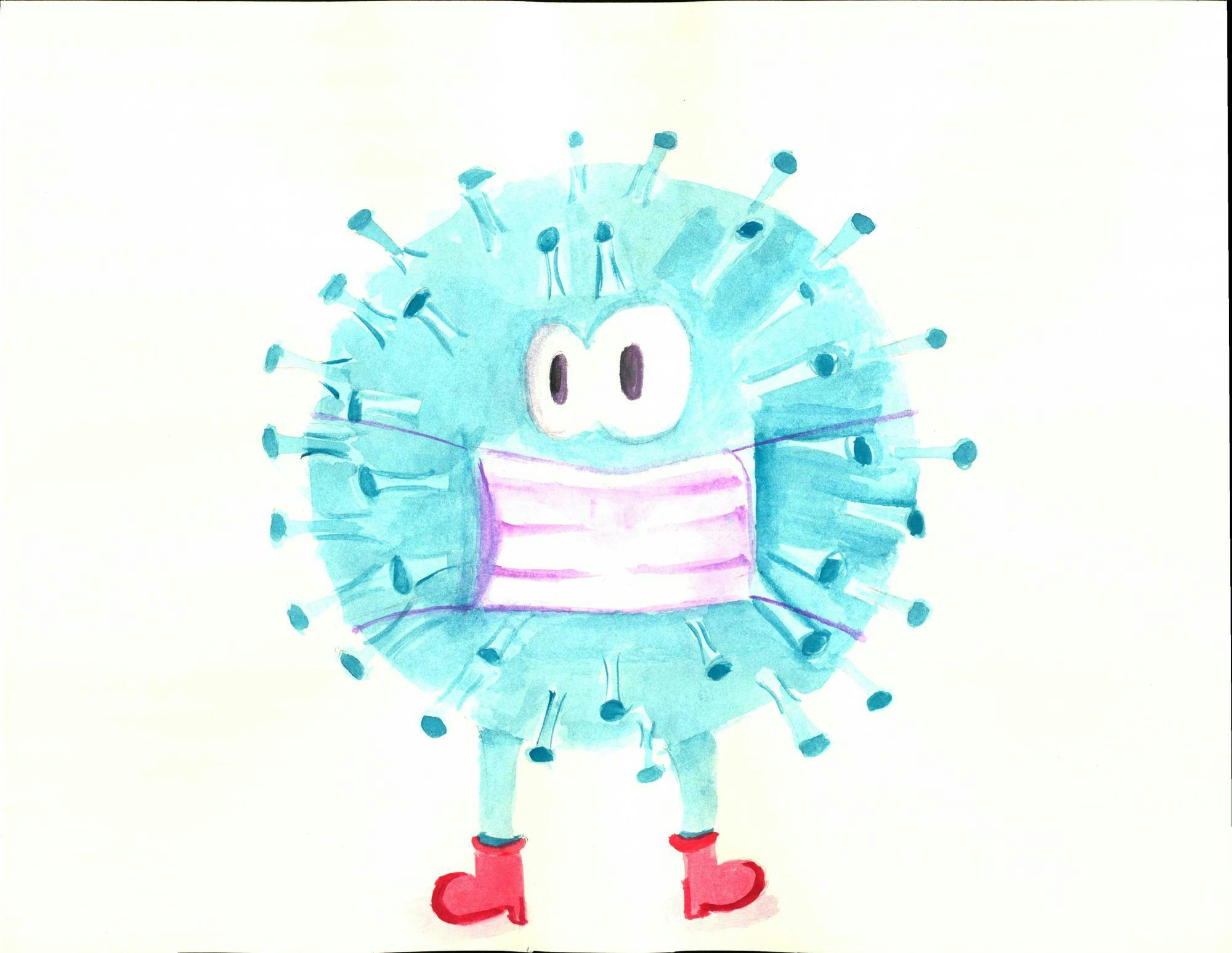
Every fall, right around the time Tufts students trade shorts for sweaters and Dewick-MacPhie Dining Center starts to push extra soup, an old and unwelcome guest shows up on campus: the flu. It happens so reliably that it’s easy to forget influenza’s strange, sometimes tragic history, one that stretches back centuries and has quietly shaped the way we think about disease and public health.
“Influenza” is actually derived from the Italian word “influentia,” linking it to an old belief that outbreaks were caused by the ‘influence’ of the stars or the cold weather itself. Doctors in medieval Europe kept noticing that these illnesses came in waves, usually when it got cold, and had no better explanation than the heavens. That guess held up, more or less unchallenged, for centuries.
It wasn’t until 1933 that anyone actually proved influenza was a virus (and not a bacterium), when researchers at the National Institute for Medical Research in London identified the human flu virus, work that later made the site home to the World Health Organization’s Worldwide Influenza Centres. In 1940, American virologist Thomas Francis Jr. finally isolated influenza B.
For a long stretch after 1918, flu science was mostly guesswork. That changed once the virus was finally identified in the early 1930s. Researchers figured out they could grow it in fertilized chicken eggs, a method still used to produce most flu vaccines today.
What really unsettled doctors was who the virus killed. Mortality was unusually high among healthy adults aged 20 to 40, a pattern unique to this pandemic, with the average age of death being just 28. The virus spread quickest in places where people lived in close quarters, like military training camps.
A lot of what we now think of as standard pandemic response, such as closing schools, banning gatherings and requiring masks, was improvised for the first time during this outbreak, with mixed results.
San Francisco was the case study: The city moved fast with a mask ordinance and business closures in October 1918, and cases dropped. Officials lifted the restrictions on Nov. 21, but cases surged again within weeks, and by the time the pandemic passed, San Francisco had one of the highest per-capita death tolls of any major U.S. city.
Francis Jr. and Jonas Salk led the effort at the University of Michigan to build the first inactivated flu vaccine, with support from the U.S. Army, which had its own reasons for caring given how much it had lost to the flu in World War I. That vaccine was licensed in 1945.
By the 1947 flu season, researchers discovered the existing vaccine no longer worked against the strains circulating that year. That scare is largely what pushed WHO’s Global Influenza Programme to establish the Global Influenza Surveillance and Response System in 1952, starting with implementing surveillance in 25 countries to report data back to the WHO.
The program has since grown into a network of more than 150 laboratories in over 100 countries. Since 1998, the network has expanded even further, making separate recommendations for the northern and southern hemispheres each year to keep pace with the virus as it drifts and shifts.
Scientists still don’t have one clean answer for why flu season is a season at all. Research out of Virginia Tech found the flu virus survives far better outside the body when humidity is below 50% or close to 100%, and typical winter air pushes humidity right into that low range.
People also tend to spend more time indoors with the windows shut in winter, breathing the same air as anyone who happens to be sick. Additionally, shorter days mean less sunlight, which can lower vitamin D levels in ways that may weaken the immune system.
Interestingly, this pattern only holds in places that actually experience winter. In warmer climates, flu activity tends to track with humidity and rainfall instead, which is part of why flu forecasting is still more art than science.
For Tufts students, all of this eventually boils down to a Health Service email, a vaccine clinic table on the quad and the annual debate over whether a sore throat is the flu or just allergies. But that small yearly ritual sits on top of a much bigger story: a misunderstood disease, a pandemic that rewrote the public health rulebook and almost a century of scientists racing to keep up with a virus that refuses to still.



