Skip to Content, Navigation, or Footer.

Features

The Setonian
Features

Common Reading Program connects incoming students with Tufts community

Before they even arrive on campus, each member of the incoming freshman class has something in common — a book. For the class of 2018, that book is “The Other Wes Moore: One Name, Two Fates,” written by Wes Moore.Incoming students each received “The Other Wes Moore” this summer as part of ...


2014-08-06-AcornHead-13
Features

'Colossal AcornHead' sculpture returns for permanent installation

A version of artist Leslie Fry's five-foot-long bronze "Colossal AcornHead" sculpture has made its way back to Tufts, replacing "Autruche II," or Banjo the Ostrich, which was removed last spring.Originally installed along the pathway to Tisch Library in May 2012, the statue was ...


2014-05-11-Jessica-Laporte-Portraits-13.tif_
Features

Senior Profile: Jessica Laporte

Senior Jessica Laporte is dedicated to causes both on and off campus. In addition to holding leadership positions in the Interdenominational Christian Fellowship (ICF) and Tufts Mountain Club (TMC), Laporte is working to develop international clean water solutions. In less than a month, Laporte will ...


2014-05-08-Joshua-Youner-19
Features

Senior Profile: Joshua Youner

Though Joshua Youner was initially interested in Tufts' international relations program, as a senior, he now focuses on economics, exploring business practices both inside and outside the classroom. An economics major and entrepreneurial leadership studies minor, Youner has also served as vice president ...


2014-05-07-Yessenia-Senior-Portraits-23.tif_
Features

Senior Profile: Yessenia Rivas

Yessenia Rivas - a choreographer for Spirit of Color (SoC), Torn Ticket II and Sarabande, as well as an actress and dancer - is a star both on and off the stage. In addition to the many performances she has been involved in, Rivas has also worked behind the scenes, as both the vice president of Sarabande ...


2014-05-09-Nicola-Chang-28.tif_
Features

Senior Profile: Nicola Chang

At Tufts, Nicola Chang found her niche in music. A lifelong percussionist and music enthusiast, Chang has played with a variety of groups during her time on campus, but has spent much of her time in Banging Everything At Tufts (BEATs)."I've been drumming for three years with them," Chang ...


2014-05-10-Brian-McLaughlin-Portraits-28
Features

Senior Profile: Brian McLaughlin

Not every student can say that he can run a four minute and 20 second mile, has performed at the South by Southwest (SXSW) music festival in Austin and will be receiving a degree in Electrical Engineering after four years at Tufts. Yet senior Brian McLaughlin somehow found a way to do it all. As an ...


2014-05-12-Jon-Bird-Portraits-24
Features

Senior Profile: Jonathan Bird

Students may recognize Jon Bird as the chair of Tufts University Programming Board, the best male model winner at the LUX fashion show, the guy who frequently wears the Jumbo mascot suit and, of course, the person who smiles at everyone he passes. Active in the Tufts community and chock full of enthusiasm, ...


Feature-Image_Place-HolderOLIN
Features

'It Happens Here' offers new forum for conversation about sexual violence

Last fall, University President Anthony Monaco named sexual assault as one the most important issues on campus, and created a university-wide sexual assault task force to address and prevent sexual misconduct at Tufts. Currently, the university is in the process of hiring a Sexual Misconduct Prevention Specialist, who will work to develop sexual assault prevention programming. In conjunction with these recent initiatives, Tufts students are hosting a variety of programming this April as part of campaign for Sexual Assault Awareness Month. On Wednesday night, students came together to share their experiences with sexual violence at "It Happens Here" (IHH), an event that provides a forum for survivors of sexual assault to share their stories.IHH was founded at Middlebury College in the fall of 2011 by Middlebury students Luke Carroll Brown, a current senior, and Margo Cramer, a recent graduate, and has since spread to a variety of colleges."I knew [sexual assault] was happening," Cramer said. "My friends had experienced it, and I had experienced it. And there was just no conversation about it -- at least at Middlebury. We had a feminist group on campus that didn't address it directly ... There was just general silence around the issue."Cramer said that she and Brown took several weeks to decide what format would work best for a campaign about sexual violence awareness and opted to focus on initiating dialogue on campus through storytelling."We started collecting stories," she said. "Sharing stories in a thoughtful manner seemed like one really important step in getting people to see this issue as an important one ... What we really wanted to do was attract a variety of submissions so that we could represent a bastion of experiences."In its third year at Middlebury, IHH has since taken off as both an online and spoken campaign. According to a Dec. 4, 2013 article published in The Middlebury Campus, the IHH campaign is currently working to establish programming at six other colleges across the country. This year, IHH was successfully launched at Tufts with the help of several sororities and the Action for Sexual Assault Prevention group."Tufts has, over the last few years, struggled with its footing in the movement of sexual assault awareness and prevention," Katrina Dzyak, a sophomore and one of the planners of IHH, said. "There is a lot lacking on the administration side ... [and] it has become [the] role [of] students, of course, to create spaces that are safe and to create programs that the university has not offered or is in the process of creating, but [that haven't] come to fruition."Annie Goodman, a junior who helped organize IHH, formed a small team of students and started planning for the event in February."I think this issue has really picked up a lot of national attention in the last year," Goodman said. "That visibility has really started accelerating. This moment right now is a really good opportunity to push forward ... We're at a point where ... people are more familiar with the language surrounding the issue."IHH called for story submissions of any length -- from 15 seconds to 15 minutes -- and form, in order to amplify the survivor's voice about a problem that is one of the largest in American universities, according to the IHH website."Some of [the stories] are merely reflections, some of them are a sentiments of reactionary emotions, but they are all very, very important," Dzyak said. "A few of them critique how we've gone about publicizing the movement, and how the 'activist community' on campus has operated and maybe excluded people. But those are very important conversations to have."Goodman also noted that there was significant variety in the submissions to IHH, which were all anonymous."I have been pleasantly surprised by the number of male submissions," she said. "I think it's really important for the movement as a whole to recognize that sexual violence is not just something that happens ... [to] a woman being attacked by a stranger at night. It takes on so many forms that can have equally damaging repercussions for the survivor"Cramer explained that the flexible structure of the event allowed for stories to be read either by their actual author or another speaker. However, it was never specified if the stories were the reader's own. "One of the really cool things about the event format, and something that Tufts has done a really great job with developing further, is giving people more power to decide how their story is shared," she said.IHH also featured a keynote speaker, Wagatwe Wanjuki, a Tufts alumna who started a blog called "Raped at Tufts University," which works to generate awareness of sexual assault by publishing first-hand accounts of survivors' stories. Since graduating, Wanjuki has become a nationally recognized sexual assault activist, with her work featured in Ebony Magazine and Feministing.com.12


The Setonian
Features

Tufts ranks high for producing Peace Corps volunteers

Tufts University ranked ninth among top medium-sized schools that produce Peace Corps volunteers, up from 15th in 2013. Twenty-four of Tufts’ undergraduate alumni are currently serving abroad with the program.Many students and officials have attributed the high number of Tufts volunteers to the focus ...


The Setonian
Features

'Not So Gentleman' enters Tufts music scene

After a year of playing together, sophomore blues trio "Not So Gentleman" performed for its first audience in the Crane Room in a Tufts AppleJam concert last Saturday. It was a night they had been anticipating for quite some time.Music has been a part of two of the band members' lives since childhood. Both Henry Butler, the band's drummer, and Avram Ellner, the band's guitarist, have played their instruments since the fourth grade. "I just took lessons, I didn't really play by myself much," Butler said. "Then in high school, I played in jazz band."But the sophomores said they kept their music to themselves until college, when they found other people who not only enjoyed playing, but also enjoyed the experience of playing together."I came from a very technical playing [background] because my guitar teacher was in a band in the '80s ... like an '80s pop metal band," Ellner said.At Tufts, they found each other through a mutual friend, band bassist Max Leonhardt. The trio soon began jamming together, even though Leonhardt had not played previously played the bass."I knew Avram [played guitar] ... and I knew Henry played drums because he was trying to find someone to play drums with, and I was like, 'Oh, I know this dude who shreds and I know this dude who play the drums,' and then, those two met up, and I was like, 'This is stupid, I want to play with my friends,'" Leonhardt said. "So one night the three of us just went into Boston and bought a bass."Leonhardt started taking lessons through Tufts, improved bit by bit, and quickly started playing the blues with Butler and Ellner. Since then, the trio has learned to better their musical talents together."We slowly weaned Avram off the metal and into the blues," Leonhardt said. "I came into it very ... metal. Then one day [Henry] actually gave me like 500 blues songs - it was like Gary Clark, Jr. and Jimi Hendrix' Blues album, like The Black Keys, stuff like that - and I was hooked, and I knew a little bit about the blues and then we started jamming some blues stuff."The simple construction that forms the basis of the blues, six notes, made learning to play with his two more experienced bandmates that much easier, Leonhardt added."You just play those six notes in different patterns ... and that was easy for me, so I just picked that up," he said.Although they play the blues, the bandmates' different music tastes and experiences as musicians, give them a sound of their own."I've been telling people [that we're] blues, rock, funk with a sprinkle of shred," Ellner said. "The good thing is we all came into it with different musical backgrounds and you can definitely hear everything combine, sort of mish mosh together into this very unique sound."Sam Worthington, a sophomore and president of AppleJam, the student collective which organized the show in which the band debuted, agreed with Ellner's description of Not So Gentlemen. He also hailed the band's first show, which headlined Shark Saddle and included Like Wolves, Dirty Lou and Thaddeus Strauss, as a success."[Not So Gentleman was] interesting. They're definitely a jam band with some rock-like influences ... they definitely have some jam elements ... Also a lot of shredding - [they are] pretty virtuous," he said. "We were pretty much at capacity of the Crane Room for the entire show but people were cycling in and out. We had probably around 200 students attend."Part of Not So Gentlemen's unique sound originates in their song selection: they make their own music."We don't formally write a song, we'll just be jamming and we'll listen to it, because usually we record every session, so we'll listen back and find something cool," Butler said. "We were messing around with this one riff, and then I said to Max, 'Well, what do you think the bass line should be?' and he was like, 'Oh I don't know,' and then sings this thing, and I was like, 'Sing it again, sing it again,'" Ellner added. "I figured it out on guitar and gave it to him on bass and that was the bass line. Sometimes it's just messing around and you stumble across something that you just pick up and see where you can take it."The bandmates have become so tuned into their own music that it's begun to permeate their friendship - even when they're not rehearsing."The other day we were hanging out, we had a guitar, and we just started jamming on the guitar and singing to it and making beats to it," Leonhardt said. "It's just become a large part of our life, music and making music together."12


Feature-Image_Place-HolderPRESLAWN
Features

Interview: Alan Solomont | New dean of Tisch College discusses political activism, Tisch progress

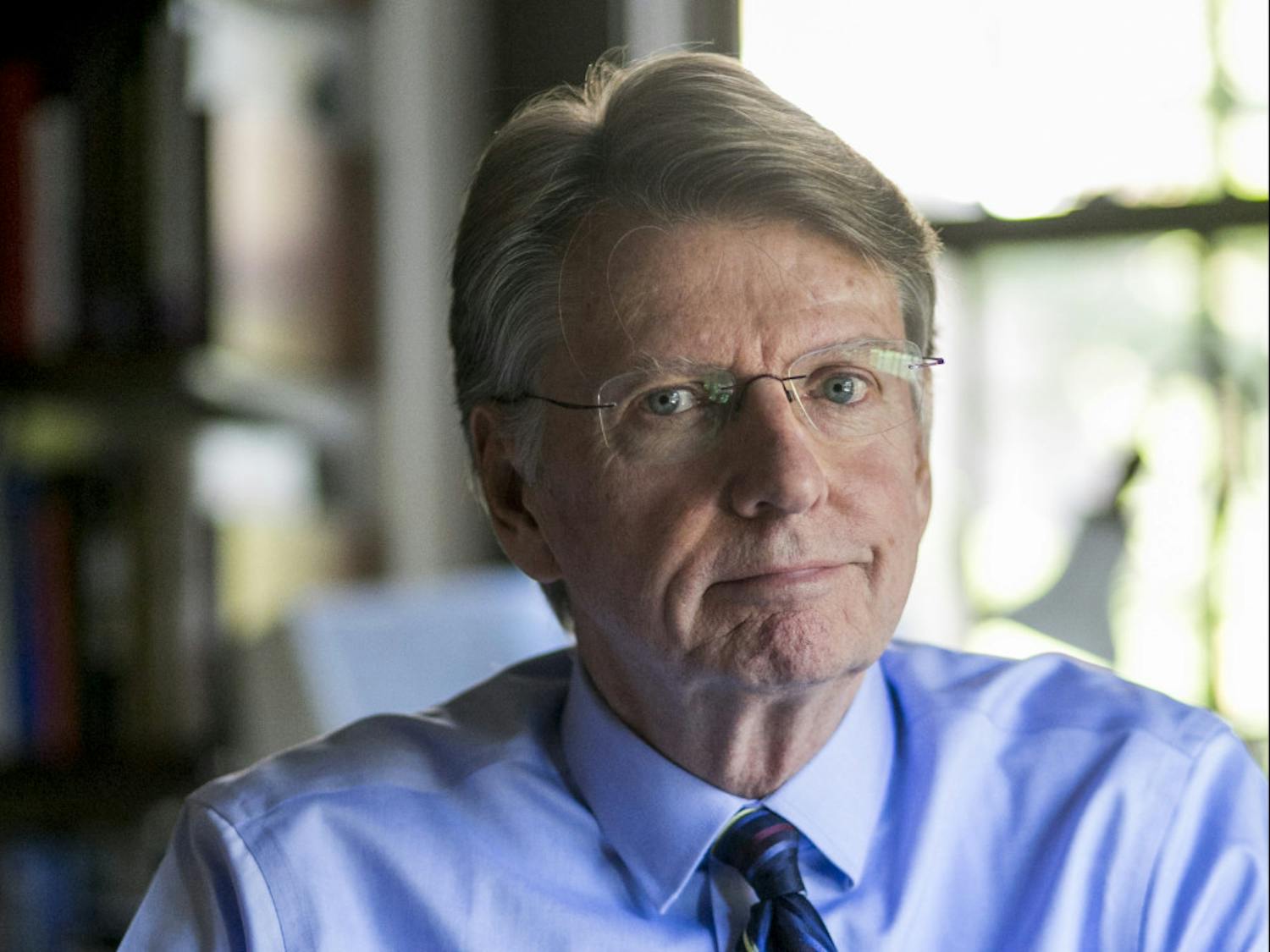
Alan Solomont (A '70), the newest Pierre and Pamela Omidyar Dean of the Jonathan M. Tisch College of Citizenship and Public Service, sat down with the Daily to discuss political activism, his experiences with Tisch College as an undergraduate and the future of civic involvement. The Tufts Daily: How did your experience as a Tufts student inspire or deepen your interest in political activism? Alan Solomont: I arrived here in the fall of 1966, a sheltered and suburban kid from Brookline, Mass. ... The sixties were a politically charged time on college campuses. Students were opposing the war in Vietnam, students were supporting the civil rights struggles, and I got deeply impacted by that. I had a professor who introduced me to this whole field of urban studies and so I started to think about what was happening in America's cities.I was a page [for] the Massachusetts delegation at the 1968 Democratic Convention in Chicago, and I was on the floor of the convention the night that the anti-war candidate Gene McCarthy was defeated by the nominee Hubert Humphrey. It was also the day of the disturbances in Grant Park ... The next time I was in Grant Park was 40 years later on election night in 2008 when Barack Obama was elected president, so it was a pretty intense set of bookends ... I have spent my life politically [active] and as an engaged citizen, and it all is a result of my experiences here at Tufts as a student. TD: How have you been connected to the university as an alumnus? AS: There was a period when I was relatively unconnected ... I graduated in 1970, I traveled overseas for a year and then I moved to Lowell, Mass., [where] I was a community organizer for the better part of the '70s. But when then [University] President [John] DiBiaggio and founding Dean of Tisch [College] Rob Hollister had this idea of creating a new college at the university to promote active citizenship, they approached me about whether I'd be interested in helping assemble what was then the first national advisory committee, which eventually became the Board of Advisors.That's really what reengaged me here at the university some fifteen years ago. And then I became a trustee and then my daughter came here and then I taught a course for four years ... on the American presidency. I tell my friends I bleed brown and blue.  TD: In what ways have you seen political activism on campus evolve since your time spent here as a student? AS: I would say that I've observed two things, one that is somewhat discouraging and one that is much more heartening. There has been an erosion over the years in people's confidence in our political institutions, [and] there has been some decline in political involvement by young people. I think for a variety of reasons, [such as] Vietnam, Watergate, the rise of the influence of money ... people have lost some confidence in the whole process.[But] I think [this] generation, the data indicates, is interested in being involved in things larger than [themselves]. I was part of the baby boomer generation, some people call it the "me" generation. Although we were idealistic, we were also sometimes narcissistic. I think [this] generation is the hope for the future ... Young people are looking to do national community service at unprecedented numbers. I really do believe that [this] generation is going to solve a lot of these problems that my generation neglected or caused. TD: To what extent has the presence of the Tisch College amplified student interest in public service? AS: It's an odd reality that Tufts has always produced people who are interested in being active citizens or who are interested in public service. I'm probably a reasonably good example of that. So that's the mission of Tisch College, to spread the importance of educating students to be lifelong active citizens and to be civically engaged. If this is part of the DNA of the university, then we're the gene that has to be its engine ... I think that we have a really important mission to maintain, to keep that important distinctive quality about this university not only alive, but [also to] keep heightening it. And I happen to believe the need for that is more pronounced today than ever before because I do think that some of the most important issues we face as a country and in the world have to do with rebuilding civil society, rebuilding civic institutions [and] reengaging the people in their communities. TD: What changes or developments would you like to see in Tisch College? AS: I'm exceedingly proud of what Tisch has accomplished. I think that founding Dean Rob Hollister, Nancy Wilson, who has been the dean for the last couple years and the board of advisors have really established a solid foundation. But I think my job is now to take that to the next level.12


The Setonian
Features

iPad pilot program expands faculty, classroom technology use

Students use iPads to watch movies, download apps and listen to music on the go, and now Tufts has begun to incorporate this mobile technology into the classroom. Tufts Educational & Scholarly Technology Services (ESTS), a university-wide service group that assists faculty in their use of technology, recently launched the iPads for Education Pilot to give faculty the opportunity to incorporate iPads into their curricula.


Feature-Image_Place-HolderPRESLAWN2
Features

Adjunct Action: SEIU's national movement for unionization of part-time faculty

In a mail ballot vote that ran from Sept. 11 through Sept. 25, part-time faculty members at Tufts voted to join Service Employees International Union (SEIU). This move makes them the only group of unionized faculty at Tufts. The union will now be the intermediary in most negotiations between the Tufts administration and the university's part-time lecturers.


The Setonian
Features

Senior Profile | Stephen Goeman

 Stephen Goeman has left a strong legacy of outspoken student activism at Tufts. As a member of Students Promoting Equality, Awareness and Compassion (SPEAC) and the Coalition Against Religious Exclusion (CARE), Goeman has become an impassioned and vocal member of the Tufts community.CARE is a relatively ...