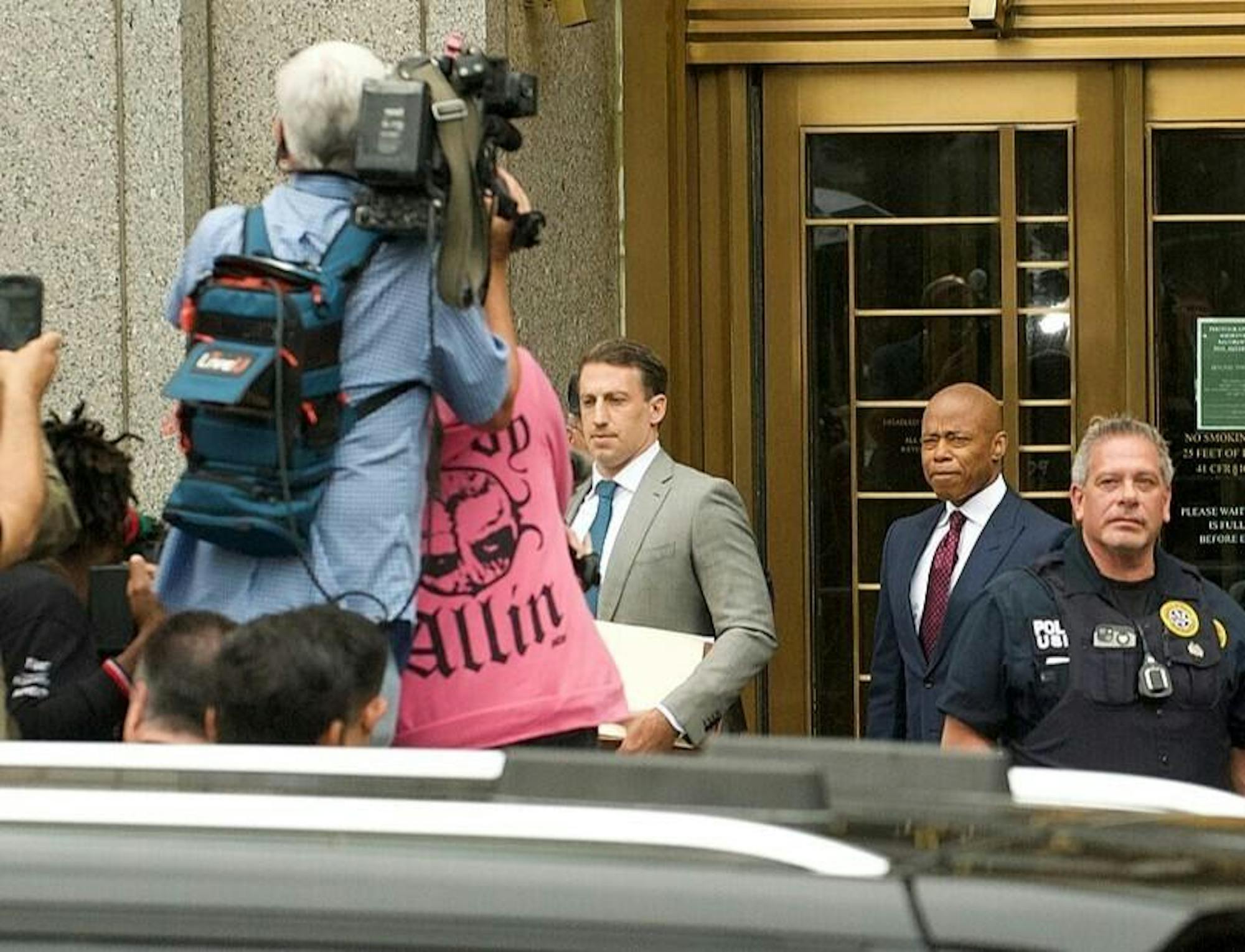
In April 2015, Thabo Sefolosha, then-forward for the Atlanta Hawks, found himself out of the playoffs after a police encounter outside of a nightclub left him with a broken leg. Although Sefolosha was initially charged with resisting arrest, obstructing governmental administration and disorderly conduct, he was offered a deal that would have avoided a criminal record. Instead, he was adamant about going to trial to clear his name — leading to the acquittal of all three charges. Immediately following the verdict, Sefolosha embraced his defense attorney, Alex Spiro.
Spiro (LA’05) describes this as one of the memories he looks back on the most as a lawyer. As a current partner at Quinn Emanuel Urquhart & Sullivan, Spiro has made a prominent name for himself as a trial lawyer. Besides Sefolosha, he has represented many high-profile clients, including Elon Musk, Jay-Z and Naomi Osaka. He describes himself as having worked in almost every area of litigation.
Despite his argumentative nature, Spiro did not grow up planning to be a lawyer; on the contrary, he expected to head to medical school after graduating from Tufts.
Spiro majored in psychology, studying behavioral psychology and biopsychology. He worked in labs where he studied both students and animals. His interest in why people act the way they do continues to shape how Spiro works in business, in courtrooms and across all areas of his life.
“I think I know more about psychology than I do about law,” Spiro said.
When it came to choosing a college, Spiro knew he had to stay near Boston due to familial circumstances. Spiro said that at Tufts, something clicked for him academically — something he did not experience in high school. He explained that Tufts caused this “aha moment,” making him feel indebted to the school.
“[My time at Tufts] was a fun, enjoyable and energizing experience,” Spiro said.
When Spiro wasn’t doing schoolwork, he volunteered his time at McLean Hospital during all four years of college. He assisted in the adolescent treatment facility, providing an extra set of hands for the staff, working with the patients and providing a perspective from someone closer in age who could relate to the kids. He became the supervisor within the adolescent treatment facility, leading to him working overnight shifts and attending class the following mornings.
After Spiro graduated summa cum laude from Tufts, he continued to work at McLean and started learning more about people with various autism-related syndromes. He was able to understand the ingenuity of the human mind and how people with these syndromes navigate life differently. He eventually developed a children’s program to get social pragmatic training for kids on the autism spectrum. While running this program, Spiro became more experienced in advocacy and management. His mentors at the hospital took note of this, telling Spiro that his skillset was leading him in a different direction.
“You are not a scientist — you are an advocate, a leader,” Spiro recalled being told.
Spiro went on to attend Harvard Law School, realizing he wanted to be able to make change directly through the law. From his courses, he developed a specific interest in trial law, practicum and advocating for people. He also gained trial experience through volunteering to represent homeless people on their social security benefits.
As a lawyer, Spiro knew he wanted to contribute to ‘change-the-world’ types of work because advocacy energizes him. While he began his career as a prosecutor, he now describes himself as a trial lawyer and litigator.
For Spiro, psychology helps his job every day.
“The world is not black and white — it’s gray and nuanced,” Spiro said. “If you understand the subjects of the scenario, you can better understand why they did what they did.”
Because of his profile, Spiro has to be selective with the cases he chooses to represent. He makes it a point to take on cases that he feels passionate about. While he has worked on many high-profile cases, Spiro explained that he also makes it a priority to work on pro bono cases as well as civil justice cases.
When preparing for his cases, Spiro likes to start his process backward. He poses what he wants the result of the case to be, whether a resolution or trial, and then works backward from there on his argument points.
When working with high-profile individuals, Spiro has to make sure he gets his points across in his own way.
“People are complicated. A lot of clients are not used to people pushing back on them, and I push back on them pretty hard,” Spiro said.
In terms of the public spotlight that follows with some of these cases, Spiro stays very confident in his own arguments. He accepts this spotlight as a part of the job and tries to tune it out, instead focusing on framing his case in the way he wants to.
Spiro believes his honesty is what makes him a successful attorney.
“I tell my clients the truth, and I think I’m an okay litigator and trial lawyer,” said Spiro.
In the future, Spiro plans to tackle certain social justice issues, one of them being women’s rights; however, he is still exploring what he can do with his life and with his career outside of law.
For any students unaware of what their next move may be, Spiro’s story is a reminder that life paths often don’t unfold as expected — and, according to Spiro, “Tufts is a good place to find where you want to go.”