Skip to Content, Navigation, or Footer.

Opinion | Viewpoint

Scrolling_on_phone.jpg
Viewpoint

Can my ignorance be blissful?

Once I submitted my last final and the freedom of summer washed over me, I made a radical decision: I would not spend a single second of break doomscrolling. Pulling out my deteriorating phone, I gleefully deleted all my social media apps, committing myself to saving my attention span and being morally superior to my peers. But it only took one 40-minute layover on my flight home for me to supplement my need to scroll with another vice: obsessively checking the news. 


DSC01658.jpg
Viewpoint

Exercise your freedom to say the wrong thing

There’s a special kind of anxiety I feel sitting in a room full of students, suspended in the silence between a professor’s question and the first raised hand. As I’ve spent the past week preparing to teach a class as part of Tufts’ Explorations program — a part of our Experimental College in which upper-level students instruct incoming first-years about a topic of their choice and help them adjust to college — I’ve been thinking, and worrying, about that dreaded silence. Why, in so many classrooms full of skilled learners, is this such a familiar phenomenon?


Sabrina_Carpenter_-_O2_Arena_2025_-_061_(cropped).jpg
Viewpoint

Pop Princess 101: Sabrina Carpenter’s new album isn’t the feminist serve you think it is

The media that individuals consume dictates their views on society. The average individual sees more than 5,000 advertisements per day, each of which has the power to shape their beliefs, attitudes and expectations. Hence, it’s imperative that popular media uplifts marginalized groups, rather than confining them to stereotypes that can normalize sexism, racism or homophobia. Gender stereotypes have persisted in popular media, from sexist portrayals of women in 20th century advertisements to their depictions in movies and music today. Although the representation of empowered women has increased, gender-restrictive stereotypes and the objectification of women are still prominent in popular media today.


Mariia
Viewpoint

Looking back on three years of writing about the war in Ukraine

When I came to Tufts in the fall of 2022, I was still in shock from the start of the full-scale invasion of my home country, Ukraine. I was exhausted by uncertainty watching the horrific news unfold, not yet knowing how to cope with the daily tragedies caused by the bombings and fighting on the frontline. Speaking up about the war on social media was helping me to feel less powerless. When I heard about the Daily, I realized that writing for the newspaper would be another great way to raise awareness about the war — a tool to turn my frustration into helpful actions. At first I was not sure that I would find support for a column about Ukraine. However, from the very first meeting in the Opinion section I felt encouraged to express my reflections about the war, and this support helped me tremendously to gain the courage to share my personal, often traumatic experiences through my writing.


Wooly Mammoth Graphic
Viewpoint

Scientists need to stop playing God

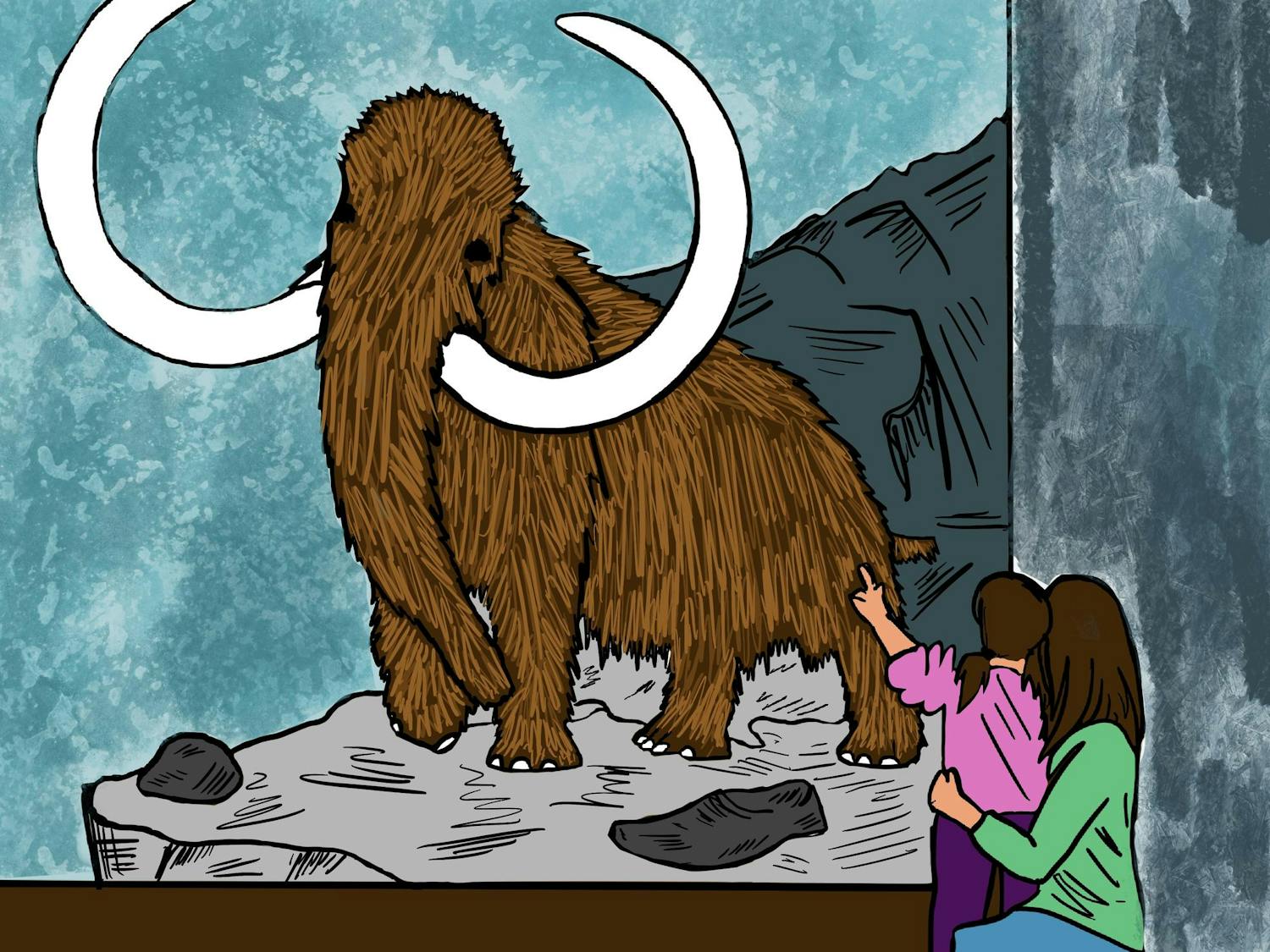
More than 47,000 species are currently threatened with extinction. Just last year, the International Union for Conservation of Nature Red List reported five newly extinct species and five others moved to the critically endangered list. Scientists from Dallas-based biotech company Colossal Laboratories & Biosciences are working to revive extinct animals in order to “jumpstart nature’s accestral heartbeat.” However, its choices in animals are questionable: Tasmanian tigers, mammoths, dire wolves and dodo birds. Colossal Laboratories & Biosciences’ mission, although a marvel of modern technology, is a shoddy attempt to restore balance to mother nature without addressing humanity’s failure to protect animals that went extinct in the last decade.


Eaton
Viewpoint

Where will the light on Walnut Hill shine next?

Over the past few months, I, like so many others, have been thinking a lot about what it means to be getting a liberal arts education. At a time when the world is changing with the advent of new technologies, changing markets and constant commentary from family friends that artificial intelligence will leave us unemployed: “Why liberal arts?” is a question that has become even more important.


Talia
Viewpoint

The road ahead looks grim, but what the hell?

If you’re part of the Class of 2025, you’re likely no stranger to the emotional whiplash of dread, anger and anxiety, sometimes punctuated by flickers of hope and anticipation, that has characterized the last few months. Perhaps you’re part of a student research project whose funding was cut. Or, the jobs that once defined your dream career no longer exist. Maybe, like most of us, you’re facing adauntingly high level of competitiveness for entry-level jobs. In short, the future does not feel bright.I, for one, do not feel limitless career potential. Regardless of what commencement speakers may say, it is objectively a terrible time to graduate from college. So, how can we, as a graduating class, cope with the fact that our plans are being forced to change due to factors beyond our control?


Rowan
Viewpoint

Life is a bit, so you might as well commit

As I prepare to graduate from Tufts, I find myself reflecting on what I’ve learned over the last four years. I’ve learned an incredible amount academically, grown emotionally and matured as an adult. Still, the piece of knowledge that grabs my shoulders and shakes me, screaming, “I am the most important!” is my new, glimmering mindset. Over my time at Tufts, I have realized that our perceptions of “reality” are often fake. As such, why not commit to living authentically, despite what others may think of you?


Joan
Viewpoint

Stop publishing authors’ works posthumously

On April 22, Knopf Publishing Company released “Notes to John,” a posthumous collection of journal entries Joan Didion wrote after sessions with her psychiatrist.The 224-page work marks the first release of new content by the writer since her 2011 memoir, “Blue Nights.”


IMG_0970.jpg
Viewpoint

Education as reorientation

When I arrived at Tufts in 2021, I knew who I was and what I wanted. When I introduced myself across countless icebreakers that fall, I made sure to let anyone and everyone know that I was here to major in international relations and minor in economics, aiming to work in a think tank after I graduated to be close to the political world. This confidence, at the time, seemed well justified. After all, since middle school, I had maintained a passionate interest in Model UN as a vehicle by which I could learn about international affairs and diplomacy, and in my International Baccalaureate program, I regarded my classes as preparation for delving deeper into international relations.


water bottles
Viewpoint

Water we doing? Gen Z needs to reevaluate their water bottle obsession

Walking through the halls of Tisch, desperate to find a study spot, my eyes can’t help but dart to what rests on everyone’s desk. No, it’s not books that my peepers are gazing at but the vast array of colorful Owala water bottles that have taken over campus. I don’t think I’ve gone a single day this school year without seeing one of those brightly-colored vessels shoved into the side pocket of a backpack or standing tall on a desk. Even the Tufts Bookstore has caught on to the epidemic, now selling a variety of Owala bottles for students to hydrate with. Yet, as I sip on my microplastic-infused water from my deteriorating bottle, I find myself struggling to understand this trend. Wasn’t it just last year that everyone was clenching their Stanley cups? And what about those insulated Hydro Flasks that would thunder when they hit the floor?


Student Workers Graphic
Viewpoint

Apply to the next on-campus job you see!

When I was notified by my supervisor at the Student Accessibility and Academic Resources Center — also known as the StAAR Center — at the end of my first year that I had been accepted as a writing fellow, I was overjoyed. First of all, it was the first job I had ever been offered. Second, it was the only on-campus job I had been accepted to after applying to countless random positions at the Mayer Campus Center and Tisch Library through Handshake. I had always wanted an on-campus job because it seemed so cool and rewarding. Now, two years later, I can confidently say I was right, and that my Tufts experience wouldn’t have been nearly as meaningful without it.


Mental Ward.jpg
Viewpoint

Improvement or imprisonment: Mental hospitals, prisons in the US share scary similarities

People tend to believe that prison is one of the worst places one can end up in America. Little do they know, psychiatric hospitals are eerily similar to prisons. Like prisons, the food is unappetizing and flavorless; the mattresses are stiff as boards and not at all conducive to sleep; and the showers have minimal privacy and tiny towels that come nowhere close to covering one’s full body. Both healthcare professionals and patients characterize the inpatient hospital environment as carceral in a way that, according to the AMA Journal of Ethics, is “not conducive to well-being or recovery.” Yet the websites for inpatient programs still tout “exceptional care” with false promises that patients will get better.


Blood Minerals in Congo
Viewpoint

How to stop the bleeding in the Congo

Having previously written two articles detailing the renewed strife in the eastern Congo, I have admittedly not been too forthcoming with my own opinions on how to confront the issue. My primary reason for this is that I do not think I have the expertise to offer any serious prescriptions, but I now believe that this shouldn’t stop me from at least trying.


President Biden hosts BTS at the White House for AAPI Month in 2022.
Viewpoint

Asian American and Pacific Islander Heritage Month is stupid

May is just around the corner and with it comes the beginning of AAPI Month. This convoluted acronym officially stands for Asian American, Native Hawaiian and Pacific Islander Heritage Month. However, in my experience, you’ll be hard-pressed to find many Americans, much less Asian Americans, Native Hawaiians and Pacific Islanders, actually celebrating an event dedicated to them. AAPI Month remains a useless holiday used to virtue signal fake acceptance of these populations as part of the “diverse” American dream.


META
Viewpoint

How effective is fact-checking on social media really?

Back in January, Meta made a bold move — it dropped third-party fact-checking on Facebook and Instagram andreplaced it with community notes. The company said this change was about deepening its “commitment to free expression.” But not everyone is buying that explanation. Critics argue that there might be political motivations at play, and they’re worried that this shift could make it even easier for disinformation and toxic content to spread on their platforms. These concerns are valid, but there are larger questions lurking underneath all of this: Does fact-checking actually work? I mean, can it really stop people from believing falsehoods? And how distinct are facts from fiction?


eaton.JPG
Viewpoint

Your women’s, gender and sexuality studies degree isn’t useless — it’s essential to maintaining democracy

When I tell people I’m majoring in sociology and Spanish, their response is almost guaranteed to be something vaguely critical of the social sciences and humanities. My favorite response I’ve received is “you’re just wasting your parents’ money” from a Floridian taxi driver. Despite the popular misconception that degrees dedicated to the social sciences and humanities are unnecessary, the current sociopolitical climate has rendered them more important now than ever.


thumbnail_191007_7865_openstudio027
Viewpoint

A tribute to Professor Sam Sommers

To this day, my grandfather mentions an English class he took his first year of college, where a professor taught him how to form his own arguments. Similarly, my father often mentions, with fairly vivid details, lectures he attended and papers he wrote that sparked his intellectual curiosity during his undergraduate years. I know that, when I am older, I will talk about the two classes I took with Professor Sam Sommers with the same kind of wistful enthusiasm.


Clique
Viewpoint

‘Clique culture’ has come to dominate clubs at Tufts

Have you ever walked into a club meeting and immediately felt unwelcome? Maybe it was because your fellow club members were already so engaged in conversation with one another that they didn’t pause for a brief moment to greet you. Maybe you tried to say a friendly hello, only to continue being ignored. If something like that has ever happened to you, you are certainly not alone, nor are you at fault. Experiences like this are most likely due to something much bigger — the toxic “clique culture” that has come to dominate countless organizations at Tufts.


Vaccine.jpg
Viewpoint

Diseases are making a comeback — we need to take action

On a quiet summer day in 1978, then-40-year-old medical photographer Janet Parker came down with chicken pox, or so she thought. Within nine days, Parker was admitted to the hospital, being too sick to stand. She had developed sores that covered her body, blinded her eyes and caused renal failure. During this horrifying ordeal, Parker’s father suffered cardiac arrest due to stress and died, while Parker’s boss committed suicide, believing he had allowed the virus to leak from the lab where he and Parker worked. Soon, Parker developed pneumonia and could no longer respond verbally. Exactly a month after her symptoms first appeared, Janet passed away.


Op-ed submissions are an integral part of our connection with you, our readers. As such, we would like to clarify our guidelines for submitting op-eds and what you can expect from the process.

Read More
The Tufts Daily Crossword with an image of a crossword puzzle
The Print Edition
Tufts Daily front page